Spoken English · Articles · October 21, 2026 · 8 min read
English conversation topics: 25 topics with questions for every level
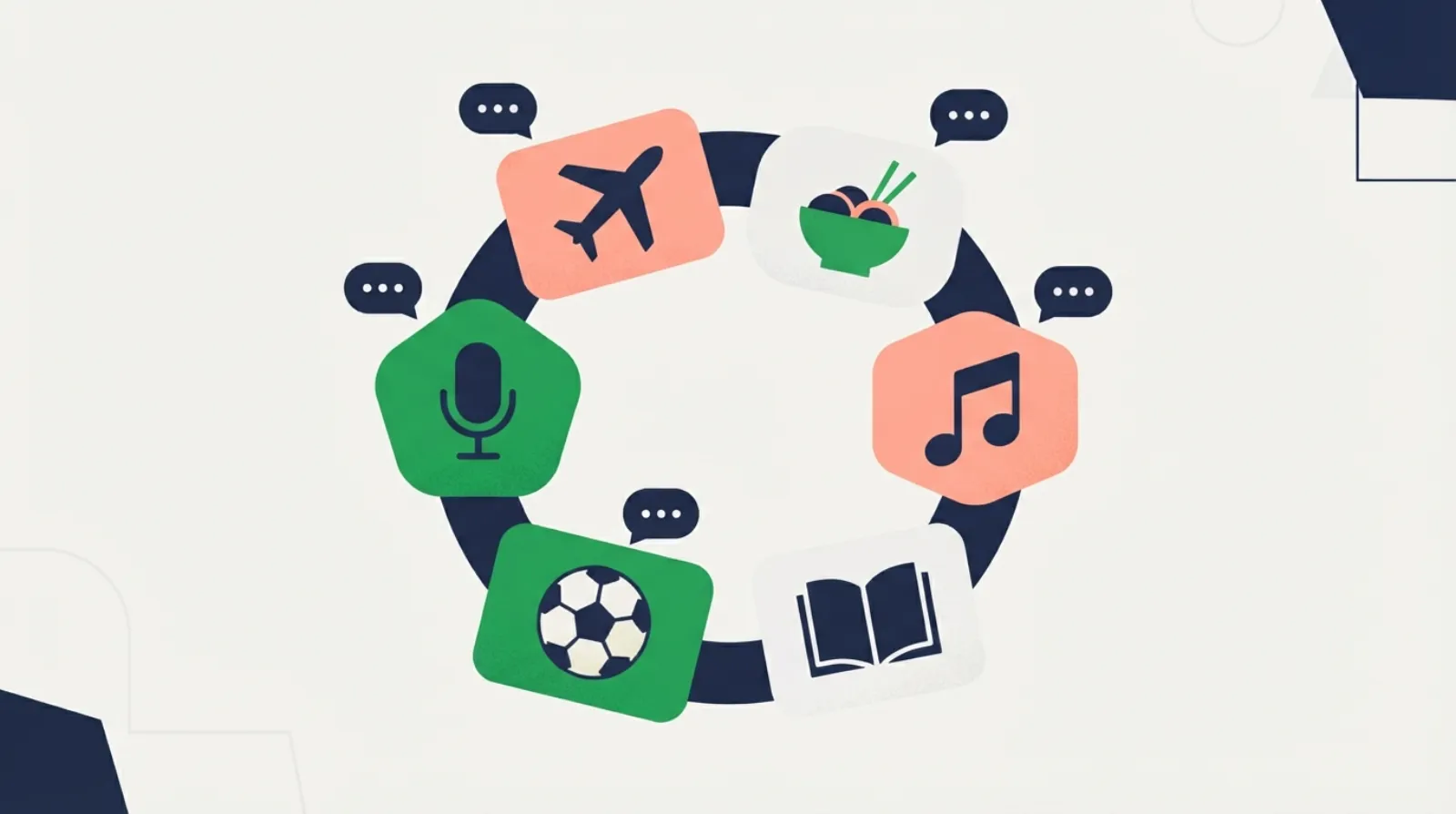
Good English conversation topics are ones people can relate to personally: hobbies, food, travel, work, technology, plans and opinions. Below are 25 topics grouped by level (beginner, intermediate, advanced), each with five ready questions you can ask a partner, a class or yourself. At the end you will find phrases that keep a conversation going, because a good topic is only half the job; the other half is asking follow-up questions.
How to use the list: pick a topic, answer each question out loud for 30–60 seconds, and then ask the same question back. If you practise alone, record yourself.
Beginner topics (A1–A2)
Simple, personal topics. Answers can be short; the goal is to speak in full sentences.
1. Yourself and your family
- Where are you from?
- How many people are there in your family?
- Who are you closest to in your family?
- What do you usually do together?
- Do you look more like your mother or your father?
2. Daily routine
- What time do you usually get up?
- What do you have for breakfast?
- How do you get to school or work?
- What’s the busiest part of your day?
- What do you do in the evenings?
3. Food
- What’s your favourite dish?
- Can you cook? What can you make?
- Do you prefer home food or eating out?
- What do people eat at festivals where you live?
- Is there any food you really don’t like?
4. Hobbies and free time
- What do you do in your free time?
- How did you start this hobby?
- Do you prefer indoor or outdoor activities?
- Is there a hobby you’d like to try?
- What did you do last weekend?
5. Weather and seasons
- What’s the weather like today?
- What’s your favourite season and why?
- What do you do when it rains?
- Do you prefer hot or cold weather?
- What’s the hottest place you’ve ever been to?
6. Shopping
- Do you like shopping?
- Do you shop more online or in stores?
- What was the last thing you bought?
- Do you compare prices before buying?
- What’s a market or shop you love?
7. Your hometown
- What is your hometown famous for?
- What’s the best place to visit there?
- How has it changed in the last ten years?
- Would you like to live there in the future?
- What would you show a visitor?
Intermediate topics (B1–B2)
Topics where you describe experiences, compare things and give reasons.
8. Movies and series
- What’s a film you could watch again and again?
- Do you prefer watching at home or in a theatre?
- Do you like dubbed films or subtitles?
- Which series are you watching at the moment?
- Is there a book you think was better than the film?
9. Music
- What kind of music do you listen to most?
- Has your taste in music changed over the years?
- Have you ever been to a concert? What was it like?
- Do you listen to music while you study or work?
- Can you play an instrument?
10. Sports and fitness
- Do you play or follow any sport?
- What’s a match you remember well?
- How do you stay active?
- Should sport be compulsory at school?
- Why do you think cricket (or football) is so popular in your country?
11. Travel
- What’s the best trip you’ve ever taken?
- Do you prefer the mountains or the beach?
- Do you like planning trips or being spontaneous?
- What’s a place you’d love to visit and why?
- Have you ever had a problem while travelling?
12. Studies and education
- What was your favourite subject at school?
- What do you think about online classes?
- Is it better to study alone or in a group?
- How do you prepare for exams?
- If you could learn any new skill, what would it be?
13. Work and careers
- What do you do, or what would you like to do?
- What makes a job satisfying?
- Would you prefer a high salary or a job you love?
- Would you like to work from home or in an office?
- What was your first job or internship like?
For interview-style questions, see how to answer “Tell me about yourself”.
14. Technology and phones
- How many hours a day do you spend on your phone?
- Which app could you not live without?
- Is technology making us more or less social?
- What gadget would you like to buy next?
- How did people manage before smartphones?
15. Social media
- Which platforms do you use most?
- Do you post a lot, or mostly scroll?
- Have you ever taken a break from social media?
- Is it a good source of news?
- What age should children start using it?
16. Health and lifestyle
- What does a healthy lifestyle mean to you?
- How do you deal with stress?
- How many hours do you usually sleep?
- Do you think people eat worse now than before?
- What’s one habit you’d like to change?
17. Festivals and celebrations
- What’s your favourite festival?
- How do you celebrate it?
- Have festivals changed since you were a child?
- What’s the best gift you’ve ever received?
- Do you prefer big celebrations or small ones?
18. Friendship
- How did you meet your best friend?
- What makes someone a good friend?
- Is it easy to make friends as an adult?
- Can you be friends with your colleagues?
- Have you ever lost touch with a close friend?
Ready-made dialogues on this kind of topic: English conversations between two friends.
Advanced topics (B2–C1)
Discussion topics. Give an opinion, support it with reasons and examples, and consider the other side.
19. Artificial intelligence
- How do you use AI tools in your daily life?
- Which jobs will change most because of AI?
- Should students be allowed to use AI for homework?
- Can AI be creative?
- What rules, if any, should there be for AI?
20. City life vs village life
- Where would you rather raise children, and why?
- What do cities offer that villages don’t, and the other way round?
- Why are so many people moving to big cities?
- How could smaller towns attract young people?
- Will remote work change where people live?
21. The environment
- What environmental problem worries you most?
- What do you personally do to reduce waste?
- Should plastic bags be banned completely?
- Who is more responsible: governments, companies or individuals?
- Are electric vehicles the answer to pollution?
22. Money and spending
- Are you a saver or a spender?
- Should schools teach financial skills?
- Is it a good idea to buy things on EMI or credit?
- Does money make people happy?
- What’s the best thing you’ve spent money on?
23. Success
- How do you define success?
- Is talent or hard work more important?
- Who is someone you consider successful, and why?
- Is failure necessary to succeed?
- Do people today have more pressure to succeed?
24. Family and generations
- How is your life different from your parents’ at your age?
- Should adult children live with their parents?
- What can older and younger generations learn from each other?
- Is it harder to be young today?
- Who makes the big decisions in families now?
25. The future
- What will your city look like in twenty years?
- What invention would you like to see in your lifetime?
- Are you optimistic about the future?
- What skills will be most important in the future?
- Where do you see yourself in ten years?
If you are preparing for an exam, the IELTS Speaking topics guide lists the topics that come up most often in the test.
Phrases that keep a conversation going
A topic starts a conversation; follow-ups keep it alive.
| Purpose | Phrases |
|---|---|
| Asking for more | Really? Tell me more. / What happened next? / Why do you think that is? |
| Asking back | What about you? / How about you? / Have you ever…? |
| Showing interest | That’s interesting. / I didn’t know that. / Oh, I see. |
| Agreeing | Exactly. / I totally agree. / That’s a good point. |
| Disagreeing politely | I see your point, but… / I’m not so sure. / I see it a bit differently. |
| Giving an opinion | In my opinion,… / Personally, I think… / If you ask me,… |
| Changing the topic | By the way,… / Speaking of…, / That reminds me… |
Mistakes that kill a conversation
- One-word answers. Do you like travelling? — Yes. Add a reason and an example: Yes, especially to the mountains. Last year I went to Manali.
- Never asking back. A conversation is an exchange. After answering, ask What about you?
- Choosing topics that are too heavy too soon. Start with personal, light topics; save politics and religion for people you know well.
- Waiting for the perfect sentence. A simple answer now is better than a perfect one after ten seconds of silence. See how to speak English fluently for phrases that buy thinking time.
How to practise
Take one topic a day. Answer all five questions out loud, then pick the question you found hardest and answer it again. You can also talk through any of these topics with Nomi in a free conversation on Nomto: tell Nomi which topic you want, and you’ll get follow-up questions like a real partner would ask, plus a correction and a more natural version of each of your lines.
FAQ
What are good English conversation topics for beginners?
Personal, everyday topics: family, daily routine, food, hobbies, weather, shopping and your hometown. You already know what to say; you only need the English.
What topics should I avoid with people I don’t know well?
Politics, religion, salary and very personal questions (age, weight, relationships) are usually best avoided at first.
How can I practise conversation topics alone?
Answer each question out loud, record yourself, and listen back. Or use an AI partner that asks follow-up questions and corrects your answers.
How do I keep a conversation going when I run out of things to say?
Ask a question back, ask for an example (What was that like?), or connect to a related topic (Speaking of travel, have you been to…?).