Spoken English · Guides · October 30, 2026 · 5 min read
Polite requests in English: how to ask for things without sounding rude
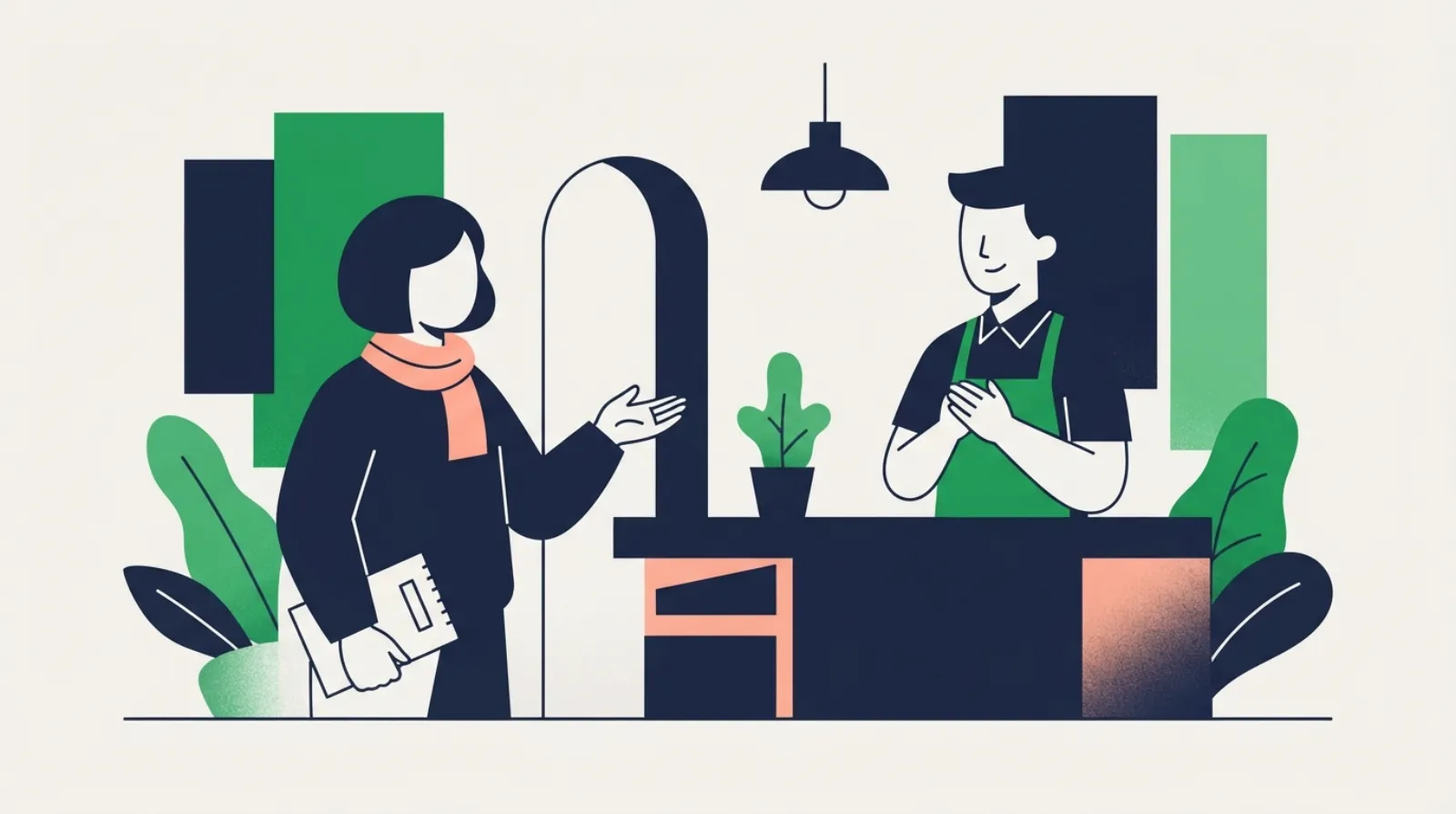
Polite requests in English depend less on the word please than many learners think. In many languages a direct command plus please is polite enough. In English, Give me the file, please can still sound bossy. English makes requests polite by turning them into questions and adding softening words. Below are the request patterns from casual to very polite, how to answer, sample dialogues and the mistakes that make learners sound rude without meaning to.
The politeness scale
| Level | Pattern | Example |
|---|---|---|
| Very direct (friends, family) | Imperative + please | Pass the salt, please. |
| Neutral | Can you…? | Can you send me the link? |
| Polite | Could you…? | Could you send me the link? |
| More polite | Would you mind + -ing? | Would you mind sending me the link? |
| Very polite | I was wondering if you could… | I was wondering if you could send me the link. |
| Formal (emails) | I would be grateful if you could… | I would be grateful if you could send me the link. |
Rule of thumb: the bigger the favour or the less you know the person, the further down the table you go.
Asking someone to do something
- Can you help me with this box?
- Could you open the window, please?
- Would you mind waiting a few minutes?
- Do you think you could check this for me?
- I was wondering if you could cover my shift on Friday.
Careful with “Would you mind”: it means Is it a problem for you? So the polite yes answer is No, not at all or Of course not.
Asking for something
- Can I have a glass of water, please?
- Could I get the bill, please?
- I’d like a medium coffee, please.
- Could I borrow your pen for a second?
Asking for permission
- Can I sit here?
- Could I leave a bit early today?
- Is it OK if I open the window?
- Do you mind if I join you?
- Would it be possible to change my appointment?
Softening words that help
Small words make a request lighter and less demanding:
- just: Could you just sign here?
- a bit / a little: Could you speak a bit more slowly?
- possibly: Could you possibly help me tomorrow?
- quickly / for a second: Can I ask you something quickly?
- I’m sorry to bother you, but…: Sorry to bother you, but could you show me the way to the station?
Giving a reason also helps: Could you turn the music down a bit? I’ve got an exam tomorrow.
Saying yes and no politely
Yes:
- Sure. / Of course. / No problem.
- Yes, go ahead.
- Happy to help.
- (to Would you mind…?) Not at all.
No:
- I’m sorry, I can’t right now. Maybe later?
- I’d love to, but I’m really busy today.
- I’m afraid that’s not possible.
- Sorry, I’m using it at the moment.
Notice that a polite no usually includes sorry or I’m afraid, a reason, and sometimes an alternative.
Sample dialogue 1: returning an item
Customer: Hi, excuse me. I was wondering if I could return these shoes. They’re too small.
Assistant: Of course. Do you have the receipt?
Customer: Yes, here it is.
Assistant: Would you like a refund or a different size?
Customer: Could I try a size bigger, please?
Assistant: Sure, just a moment… Here you go.
Customer: These are perfect. Thanks so much.
Sample dialogue 2: at work
Nadia: Hi Sam, sorry to bother you. Have you got a minute?
Sam: Sure, what’s up?
Nadia: Would you mind having a quick look at my slides before the meeting?
Sam: Not at all. Send them over.
Nadia: Thanks. And could you possibly check the numbers on slide five? I’m not sure about them.
Sam: No problem. Give me ten minutes.
Sample dialogue 3: with a neighbour
Ade: Hi, sorry to bother you so late.
Neighbour: That’s OK. Is everything all right?
Ade: Yes, it’s just… could you turn the music down a little? I’ve got an early start tomorrow.
Neighbour: Oh, sorry! I didn’t realise it was so loud. Of course.
Ade: Thanks a lot. Have a good night.
Common mistakes
- Commands with please. Send me the report, please can sound like an order. Try Could you send me the report?
- “Kindly do the needful.” Common in South Asian emails, but unclear elsewhere. Say what you need: Could you please approve the leave request?
- “I want…” in shops and restaurants. I want a coffee sounds demanding. Use I’d like… or Can I have…?
- “Would you mind to help me?” After mind, use -ing: Would you mind helping me?
- Answering “Would you mind…?” with “Yes”. Yes means Yes, I mind. Say No, not at all.
- Too many polite layers with friends. I was wondering if you could possibly pass the salt sounds strange at dinner. Match the level to the situation.
Practise asking politely
Polite forms become natural only when you use them in real situations. The conversation below this article opens the Return an item room on Nomto: Nomi plays a shop assistant, you ask for a refund or exchange, and after each reply you see a more polite and natural version. Related guides: phone conversation in English, how to say sorry and ways to say thank you.
FAQ
What is the most polite way to ask for something in English?
Would you mind…?, I was wondering if you could… and I would be grateful if you could… are the most polite. Could you…? is polite enough for most everyday situations.
Is “could you” more polite than “can you”?
Yes, slightly. Can you is fine with friends and colleagues; could you is better with strangers, customers and managers.
How do I answer “Would you mind…?”
If you agree to help, say No, not at all or Of course not. If you can’t, say Sorry, I’m afraid I can’t right now.
Is “please” enough to be polite in English?
Not always. A question form (Could you…?) usually matters more than please. The best is both: Could you help me, please?