The HSK exam: how it works, where to take it and how to register
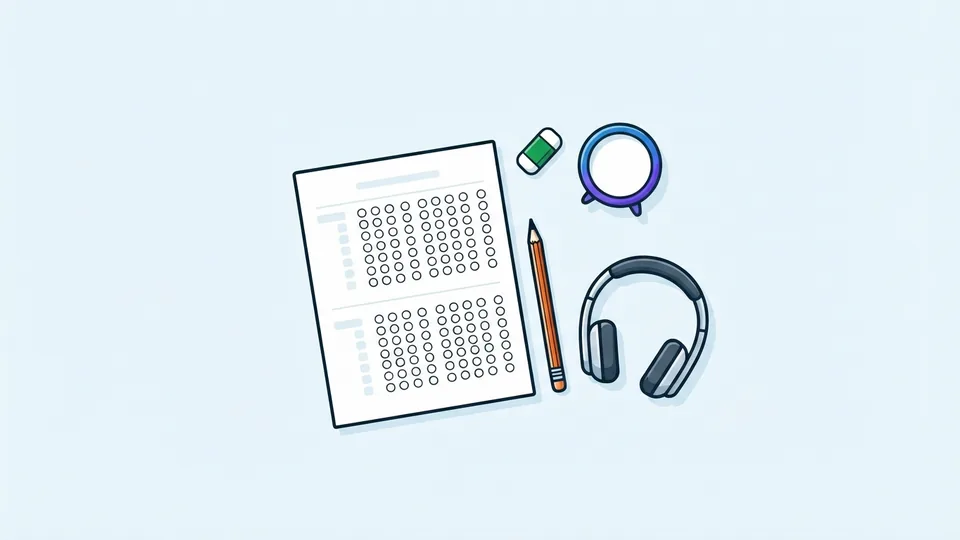
The HSK is the international Chinese proficiency exam for people whose first language isn't Chinese. It is held at test centres around the world, many of them at universities: you pick a level, register on chinesetest.cn or through a centre, and show up on the test day. In 2026 the exam still runs in the old six-level format, while sessions under the new HSK 3.0 syllabus are starting. Below: how the exam works, how to find a test centre, how dates and fees work, and how to register.
What the HSK exam is and why you'd need the certificate
The full name of the exam is 汉语水平考试, "Chinese proficiency test". It is made of three words: , and . The first letters of their pinyin — Hànyǔ Shuǐpíng Kǎoshì — give the abbreviation HSK.
The certificate is used for studying and working in China, for internships, scholarships and jobs at Chinese companies. Level 4 is often cited as the basic language requirement for studying in China, but the level asked of you is decided by the specific university or employer. Registration and results are on the official exam portal, chinesetest.cn.
How the HSK exam works: parts, timing and passing score
The current format has six levels. The first two have two parts: listening and reading. From level 3, writing is added. The table shows how long each level takes, the maximum score and the passing score.
| Level | Parts | Duration | Maximum / pass |
|---|---|---|---|
| HSK 1 | listening, reading | 40 min | 200 / 120 |
| HSK 2 | listening, reading | 55 min | 200 / 120 |
| HSK 3 | listening, reading, writing | 1 h 30 min | 300 / 180 |
| HSK 4 | listening, reading, writing | 1 h 45 min | 300 / 180 |
| HSK 5 | listening, reading, writing | 2 h 05 min | 300 / 180 |
| HSK 6 | listening, reading, writing | 2 h 20 min | 300 / 180 |
An example of the structure: HSK 3 has 80 questions in all — 40 listening, 30 reading and 10 writing — in about 90 minutes. HSK 1 is the shortest: 40 minutes, two parts, no writing. It helps to know the names of the parts in Chinese beforehand:
- 听力tīnglìlistening
- 阅读yuèdúreading
- 口语kǒuyǔspoken languagethe speaking part
You can take the exam on paper or on a computer at the centre. The portal also lists a home-based online exam, but whether it's available depends on your centre — ask when you register.
The HSKK speaking test. This is a separate exam where your answers are recorded. It has three levels: elementary, 17 minutes — repeat sentences and answer questions; intermediate, 21 minutes — plus describing a picture; advanced, 24 minutes — retelling, reading aloud and answering questions. The pass mark is 60 out of 100. Since 2025 the HSKK is required together with levels 3–6: HSK 3 is taken with the elementary HSKK, HSK 4 with the intermediate, HSK 5 and HSK 6 with the advanced, on the same day as the written exam. For the first two levels the speaking part is optional.
The HSK exam in 2026: what changes with HSK 3.0
The new syllabus was published in November 2025. It has nine levels instead of six, in three stages: levels 1–3 for everyday communication, 4–6 for study, work and daily life, 7–9 for professional and academic Chinese. The early levels got more words: 300 instead of 150 for HSK 1. A table for every level is in the article on HSK 3.0.
Trial sessions were held on January 31, 2026, at selected sites. Test centres switch to the new format at different times: some already list their first new-format sessions for the end of 2026 and run the old format until then. When your centre switches, ask the centre.
From the descriptions of the new format published so far, these tasks are new:
- Speaking — describing pictures.
- HSK 3 — writing a sentence about a picture.
- HSK 4 — an essay of at least 80 characters.
- HSK 5 — two essays: at least 100 characters based on pictures, and about 200 characters.
- HSK 6 — two essays: about 150 and about 300 characters.
- Levels 7–9 — one combined test, including translation from a language of your choice into Chinese and back.
We don't give the number of questions or the passing scores for the new format here: check them on the official exam website before you register.
Where to take the HSK: finding a test centre
The exam is run by authorized test centres — many at universities, some at language schools and cultural institutes — in many countries. The up-to-date list with addresses is in the test centre search on chinesetest.cn: that way you only see centres that actually hold the exam now. The list changes, so we don't name centres here.
When you choose a centre in your city or country, ask three things: which format the next session uses — the old one or HSK 3.0; whether it's on paper or on a computer; and when registration closes.
HSK test dates and how much the exam costs
There is no single schedule that every centre follows. The exam has a number of test dates a year, and each centre holds the exam on some of them, so the dates near you depend on your centre. Registration closes well before the exam — at some centres about two months ahead — and the number of seats is limited, so don't leave it to the last minute.
The HSK fee is also set locally: it differs by country, by centre and by level. From level 3 it is usually higher, because the required speaking test is included. We don't quote prices because they vary so much: the exact amount comes from the centre you register with, and you'll see it when you register.
How to register for the HSK and when the results come
- Choose a level and a centre. Find the centre through the search on the official exam website.
- Check the date and the registration deadline. Registration closes long before the exam, sometimes about two months ahead.
- Register. In many places you do it on chinesetest.cn itself: create an account, pick the test, the centre and the date, and fill in your details. Some centres take registrations directly. You usually need an ID document — the one you'll bring on the day — and for levels 3–6 a photo as well. The exact list comes from the centre.
- Pay the fee the way your centre asks and wait for the confirmation.
- Go to the exam with the same ID. What else to bring and when to arrive, the centre will tell you.
Results appear on chinesetest.cn about a month after the exam. The paper certificate reaches the centre about a month after that. The result is valid for two years — keep that in mind if you're taking it for an application: the certificate shouldn't expire before you submit your documents.
Which level to take and how to prepare
Choose the level from your goal: first find out which certificate your university or employer asks for, then compare it with your vocabulary. If you don't have a goal yet, take the level whose words you know almost all of — sitting an exam you're not ready for is an expensive way to practise. What a person can do at each level is in the article on HSK levels.
Preparation means the words and grammar of the level plus the skill of answering questions against the clock. A plan by level and timeline is in the article on preparing for the HSK, and where to find practice questions and how to test yourself is in the article on HSK tests. The word lists with audio are open for free, starting with the HSK 1 words.
To be clear about us: Nomto is a course, not a test centre. We don't register you for the exam and we don't issue certificates. There is a timed mock exam in the new HSK format for all six levels, and you can work through the words and grammar of the six levels of the HSK 3.0 syllabus with us, in order.
Check the words of your level
A 20-question mini test on the words of the level: by ear, by the character and by the meaning. Free.
Take the test