Weather and seasons in Chinese
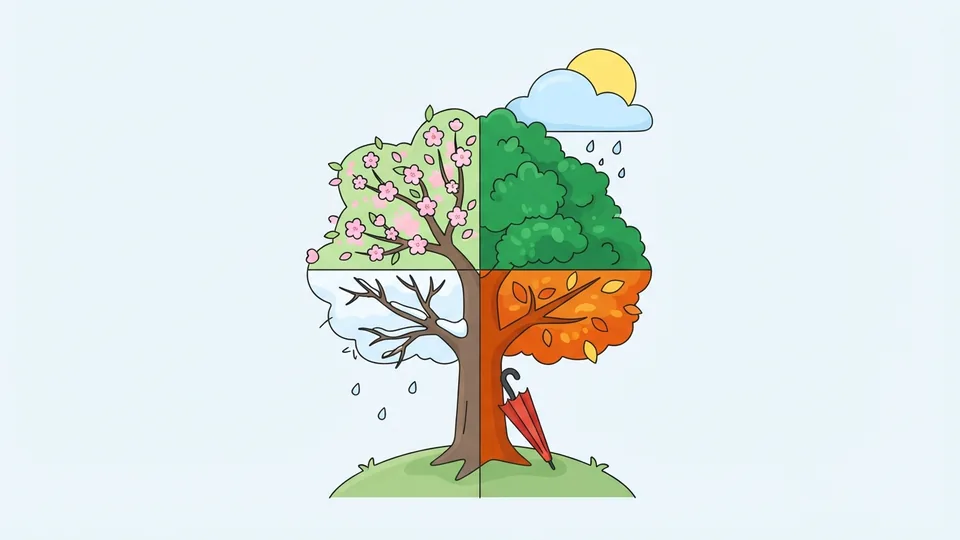
Talking about the weather in Chinese takes very short sentences: "it's cold today" is three words, "it's raining" is two. There's hardly any grammar to learn, but two things work differently from English: "cold" and "hot" don't need a verb like "is", and with rain and snow the verb "come down" goes first, with no "it". Below are the words and phrases, each with a recording you can play.
How to ask "what's the weather like?" in Chinese
- 天气tiānqìweather
- 怎么样zěnmeyànghow, what like
The question has three parts: when, "weather", and 怎么样, "how is it?". There's no word for "what" here, and 怎么样 always goes at the end. The word 天气 is made of "sky" and "air".
- 今天天气怎么样?jīntiāntiānqìzěnmeyàngWhat’s the weather like today?
- 明天天气怎么样?míngtiāntiānqìzěnmeyàngWhat’s the weather like tomorrow?
- 今天外面热吗?jīntiānwàimiànrèmaIs it hot outside today?
Cold and hot in Chinese: no 是 needed
- 冷lěngcold
- 热rèhot
- 暖和nuǎnhuowarm
- 凉快liángkuaicool, pleasantly cool
In English you need "is": "it is cold". In Chinese an adjective works as the verb by itself, so 是 ("to be") doesn't go in front of it. Instead you usually put : 今天很冷, "it's cold today". Here 很 barely means "very"; it simply links the thing and its quality. 今天是冷 is a mistake.
- 外面很冷。wàimiànhěnlěngIt’s cold outside.
- 冬天很冷。dōngtiānhěnlěngIt’s cold in winter.
- 今天太热了!jīntiāntàirèleIt’s way too hot today!
- 今天不冷不热。jīntiānbùlěngbúrèIt’s neither cold nor hot today.
- 今天比昨天凉快jīntiānbǐzuótiānliángkuaiIt’s cooler today than yesterday.
It's raining, it's snowing
- 下雨xiàyǔto rain
- 雨yǔrain
- 雪xuěsnow
- 风fēngwind
- 伞sǎnumbrella
The verb means "to come down, to fall". 下雨 is literally "falls rain", and 下雪 xià xuě is "falls snow". The verb comes first and then what falls: not "the rain falls" but "falls rain". There's no "it" either. For wind you say 刮风 guā fēng, "the wind blows".
- 要下雨了。yàoxiàyǔleIt’s going to rain.
- 下雨了,你带伞了吗?xiàyǔle,nǐdàisǎnlemaIt’s started raining. Did you bring an umbrella?
- 外面下着雨。wàimiànxiàzheyǔIt’s raining outside.
- 外边下雪了。wàibianxiàxuěleIt’s started snowing outside.
- 外边刮风了。wàibianguāfēngleThe wind has picked up outside.
- 明天可能下雨míngtiānkěnéngxiàyǔIt might rain tomorrow.
The particle 了 at the end marks a change: 下雨了, "it's started raining", it wasn't a minute ago. 要…了 means "about to": 要下雨了. And 着 after a verb says the action is going on right now, much like English "-ing": 下着雨, "it's raining".
Sunny, overcast, cloudy
- 晴qíngclear, sunny
- 阴yīnovercast
- 云yúncloud
- 太阳tàiyángsun
- 雾wùfog
In speech 晴 and 阴 usually get 天, "day": 晴天 qíngtiān, "a sunny day", 阴天 yīntiān, "an overcast day". These are nouns, so here 是 is exactly what you need: 今天是晴天. "Cloudy" in a forecast is 多云 duōyún, literally "many clouds".
- 今天是晴天jīntiānshìqíngtiānIt’s a sunny day today.
- 明天阴天,可能下雨míngtiānyīntiān,kěnéngxiàyǔTomorrow will be overcast, maybe with rain.
- 太阳出来了tàiyángchūláileThe sun has come out.
- 今天风很大jīntiānfēnghěndàIt’s very windy today.
A strong wind in Chinese is a "big" one: 风很大. The same goes for rain and snow, a lot like English "heavy" and "light": 大雨 is heavy rain, 小雨 light rain, 大雪 heavy snow.
The four seasons in Chinese
- 春天chūntiānspring
- 夏天xiàtiānsummer
- 秋天qiūtiānfall, autumn
- 冬天dōngtiānwinter
- 季节jìjiéseason
All four names end in 天. "In spring", "in winter" take no "in": you just put the season at the start of the sentence, 冬天很冷, "it's cold in winter". The four seasons together are .
- 你最喜欢哪个季节nǐzuìxǐhuannǎgejìjiéWhich season do you like best?
- 我最喜欢春天。wǒzuìxǐhuanchūntiānI like spring best.
- 秋天不冷也不热qiūtiānbùlěngyěbúrèIn the fall it’s neither cold nor hot.
- 冬天经常下雪dōngtiānjīngchángxiàxuěIt often snows in winter.
- 北方的冬天很冷běifāngdedōngtiānhěnlěngWinters in the north are cold.
- 这儿一年四季都很热。zhèryìniánsìjìdōuhěnrèIt’s hot here all year round.
Temperature and the weather forecast
- 度dùdegree
- 气温qìwēnair temperature
- 零下língxiàbelow zero
- 预报yùbàoforecast
China measures temperature in Celsius, not Fahrenheit, so 二十度, "twenty degrees", is a pleasant 68 °F. The number goes before 度. Below freezing is 零下, "below zero", and it comes before the number: 零下五度, "minus five", about 23 °F. Forecasts use the full ; in conversation 度 is enough. For the numbers themselves, see the guide to Chinese numbers.
- 今天外面多少度?jīntiānwàimiànduōshaodùWhat’s the temperature outside today?
- 今天零下五摄氏度。jīntiānlíngxiàwǔshèshìdùIt’s minus five degrees Celsius today.
- 天气预报说,明天有雨。tiānqìyùbàoshuō,míngtiānyǒuyǔThe forecast says it’ll rain tomorrow.
- 今天夜间有小雨。jīntiānyèjiānyǒuxiǎoyǔLight rain tonight.
- 未来几天都是晴天。wèiláijǐtiāndōushìqíngtiānSunny for the next few days.
- 天气越来越冷了。tiānqìyuèláiyuèlěngleIt’s getting colder and colder.
The weather forecast is 天气预报 tiānqì yùbào. Forecasts often say 有雨, "there will be rain", instead of 下雨: 明天有雨. The pattern 越来越 means "more and more": 越来越冷, "colder and colder", 越来越热, "hotter and hotter".
How to remember it
Every morning, answer 今天天气怎么样? in Chinese with one sentence: 今天很冷, 今天下雨, 今天是晴天. Within a week you'll have used nearly every word in this article. The most common ones, 天气, 冷, 热, 下雨 and 雪, are on the HSK 1 word list.
Say what the weather is like today
In the lessons you answer questions about the weather and the seasons out loud, and new words come back for review. Free during the beta.
Start for free