Food in Chinese: dishes, drinks and how to order
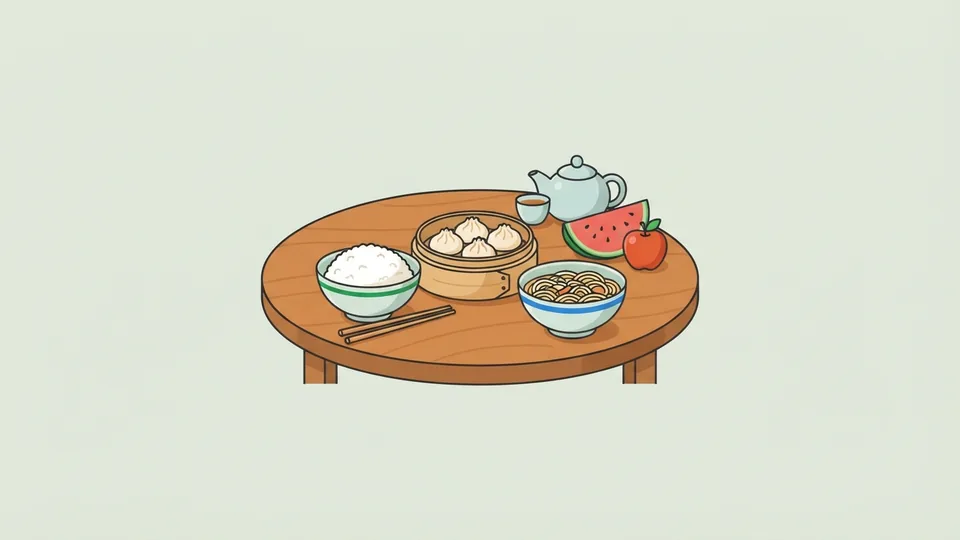
Food is the first topic you'll need in China: menus there often have no translation, and the server is unlikely to speak English. Below are the words for dishes, drinks, fruit and vegetables, phrases for ordering at a café, and words for how things taste. You can listen to almost all of them: tap the speaker icon.
The basics: rice, noodles, dumplings
- 米饭mǐfàncooked rice
- 面条儿miàntiáornoodles
- 饺子jiǎozidumplingsjiaozi, boiled or pan-fried
- 包子bāozibaozia steamed bun with a filling
- 面包miànbāobread
- 鸡蛋jīdànegg
- 肉ròumeat
- 鱼yúfish
- 汤tāngsoup
- 菜càidish; vegetables
菜 has two meanings: "vegetables" and "a dish", any dish, meat ones included. Hence 菜单, "menu", literally "a list of dishes", and 中国菜, "Chinese food". Kinds of meat are named after the animal: 牛肉 niúròu is beef, 鸡肉 jīròu is chicken, 羊肉 yángròu is lamb. If you just say 肉, a Chinese speaker will most likely think of pork.
- 我想吃饺子。wǒxiǎngchījiǎoziI’d like some dumplings.
- 我想吃面条儿wǒxiǎngchīmiàntiáorI’d like some noodles.
- 我不吃肉。wǒbùchīròuI don’t eat meat.
The two key verbs of the topic are and . "I'd like to eat" is 我想吃…, "I don't eat" is 我不吃…; the second one is a lifesaver if you're vegetarian or avoid something.
Drinks in Chinese
- 水shuǐwater
- 茶chátea
- 咖啡kāfēicoffee
- 牛奶niúnǎimilk
- 果汁guǒzhījuice
- 啤酒píjiǔbeer
- 绿茶lǜchágreen tea
- 红茶hóngcháblack tealiterally “red tea”
The tea English calls black is "red" in Chinese, after the color of the brewed tea, not the leaves. The general word for drinks is , and for alcohol it's .
- 你想喝什么nǐxiǎnghēshénmeWhat would you like to drink?
- 你喝咖啡还是喝茶?nǐhēkāfēiháishihēcháWill you have coffee or tea?
- 我想喝一杯茶wǒxiǎnghēyìbēicháI’d like a cup of tea.
- 我不喝牛奶wǒbùhēniúnǎiI don’t drink milk.
Fruit in Chinese
- 水果shuǐguǒfruit
- 苹果píngguǒapple
- 香蕉xiāngjiāobanana
- 西瓜xīguāwatermelon
- 葡萄pútaograpes
- 橙子chéngziorange
- 梨lípear
- 桃táopeach
水果 is literally "water fruit". At the market, fruit and vegetables are sold by weight, and the unit is the : 500 grams, a little over a pound. Prices are given per jin, not per kilo.
- 你喜欢吃什么水果?nǐxǐhuanchīshénmeshuǐguǒWhat fruit do you like?
- 我喜欢水果,尤其是西瓜。wǒxǐhuanshuǐguǒ,yóuqíshìxīguāI love fruit, especially watermelon.
- 苹果多少钱一斤?píngguǒduōshaoqiányìjīnHow much is a jin of apples?
- 我要两斤苹果。wǒyàoliǎngjīnpíngguǒTwo jin of apples, please.
Vegetables
- 蔬菜shūcàivegetables
- 西红柿xīhóngshìtomato
- 土豆tǔdòupotato
- 黄瓜huángguācucumber
- 玉米yùmǐcorn
- 豆腐dòufutofu
Many names are built from simple parts: 西红柿 is a "western red persimmon", 土豆 an "earth bean". The character 瓜 covers squashes, melons and cucumbers: 黄瓜 is a "yellow 瓜", even though cucumbers are green, and the watermelon 西瓜 is a "western 瓜". Tofu isn't a vegetable but bean curd, yet on menus it usually sits next to the vegetable dishes.
- 多吃蔬菜和水果duōchīshūcàihéshuǐguǒEat more fruit and vegetables.
- 今天我做西红柿鸡蛋汤jīntiānwǒzuòxīhóngshìjīdàntāngToday I’m making tomato and egg soup.
Breakfast, lunch and dinner
- 早饭zǎofànbreakfast
- 午饭wǔfànlunch
- 晚饭wǎnfàndinner
All three words work the same way: a time of day plus . "Morning + meal" is breakfast, "noon + meal" is lunch, "evening + meal" is dinner. On hotel menus and signs you'll also see the more formal 早餐, 午餐 and 晚餐, which mean the same thing.
- 你几点吃早饭nǐjǐdiǎnchīzǎofànWhat time do you have breakfast?
- 早饭我吃面包和鸡蛋zǎofànwǒchīmiànbāohéjīdànFor breakfast I have bread and eggs.
- 我们中午十二点吃午饭wǒmenzhōngwǔshí’èrdiǎnchīwǔfànWe have lunch at twelve noon.
- 我们晚上八点吃晚饭wǒmenwǎnshangbādiǎnchīwǎnfànWe have dinner at eight in the evening.
How to order food in Chinese
One pattern is enough to order: 我要, "I'll have", then how many and what. Quantities take a measure word: not "one rice" but "one bowl of rice". If you don't know the name of a dish, point at it on the menu; the phrases for that are in the article on phrases for travelers.
- 我要一碗牛肉面wǒyàoyìwǎnniúròumiànA bowl of beef noodles, please.
- 我要两个包子,还要一杯茶wǒyàoliǎnggebāozi,háiyàoyìbēicháTwo baozi and a cup of tea, please.
- 我想点一杯咖啡wǒxiǎngdiǎnyìbēikāfēiI’d like to order a coffee.
- 你能吃辣吗?nǐnéngchīlàmaCan you eat spicy food?you may be asked this by the server or your friends
- 请再加一份米饭qǐngzàijiāyífènmǐfànAnother portion of rice, please.
- 再来一杯茶。zàiláiyìbēicháAnother cup of tea.
- 请帮我打包qǐngbāngwǒdǎbāoCould you pack this to go, please?
"To order" is 点 diǎn: 点菜 means "to order dishes". In an order, 还 means "and also": 还要一杯茶. And 再来 is "bring another" of something you've already had. You call the server 服务员 fúwùyuán, and to ask for the check you say or 买单 mǎidān.
Delicious, spicy, sweet: taste words
- 好吃hǎochīdelicious
- 辣làspicy, hot
- 甜tiánsweet
- 酸suānsour
- 咸xiánsalty
- 苦kǔbitter
- 味道wèidàotaste, flavor
- 饿èhungry
好吃 is literally "good to eat", and it's only said about food. For drinks it's 好喝 hǎohē, "good to drink": good tea is 好喝, not 好吃. Don't put 是 between a thing and its quality the way English uses "is"; 很 usually goes there instead: 这个西瓜很甜, "this watermelon is (very) sweet".
- 这个菜的味道怎么样?zhègecàidewèidàozěnmeyàngHow does this dish taste?
- 这个西瓜很甜zhègexīguāhěntiánThis watermelon is very sweet.
- 好吃是好吃,就是太辣了hǎochīshìhǎochī,jiùshìtàilàleIt’s tasty all right, it’s just too spicy.
- 味道不错,就是有点儿咸wèidàobúcuò,jiùshìyǒudiǎnrxiánIt tastes good, just a bit too salty.
- 我饿了。wǒèleI’m hungry.
- 我吃饱了wǒchībǎoleI’m full.
before a quality means "a little, and I don't like it": 有点儿咸 is "a bit too salty", 有点儿辣 "a bit too spicy". You don't use it for things you like.
Measure words for food
Food and drinks are counted by the dish they're served in, or by portions. The measure word goes between the number and the thing: 一碗米饭, "one bowl of rice".
- 碗wǎnbowl一碗米饭: a bowl of rice
- 杯bēicup, glass一杯茶: a cup of tea
- 瓶píngbottle一瓶啤酒: a bottle of beer
- 份fènportion, serving一份米饭: a portion of rice
- 个gèpiece (general)两个包子: two baozi
- 双shuāngpair一双筷子: a pair of chopsticks
- 我要一碗米饭。wǒyàoyìwǎnmǐfànA bowl of rice, please.
- 我要一杯冰水wǒyàoyìbēibīngshuǐA glass of ice water, please.
- 你会用筷子吗nǐhuìyòngkuàizimaCan you use chopsticks?
The dishes themselves, as objects, have slightly different names: a cup is 杯子, a bottle is 瓶子, and 筷子 are chopsticks. How measure words work and which ones you need first is covered in the article on measure words.
Order lunch in Chinese
In the lessons you choose a dish, ask for a cup of tea and check the price: you build sentences from words and say them out loud. Free during the beta with an account.
Start for free