Chinese measure words: 个, 本, 杯 and more
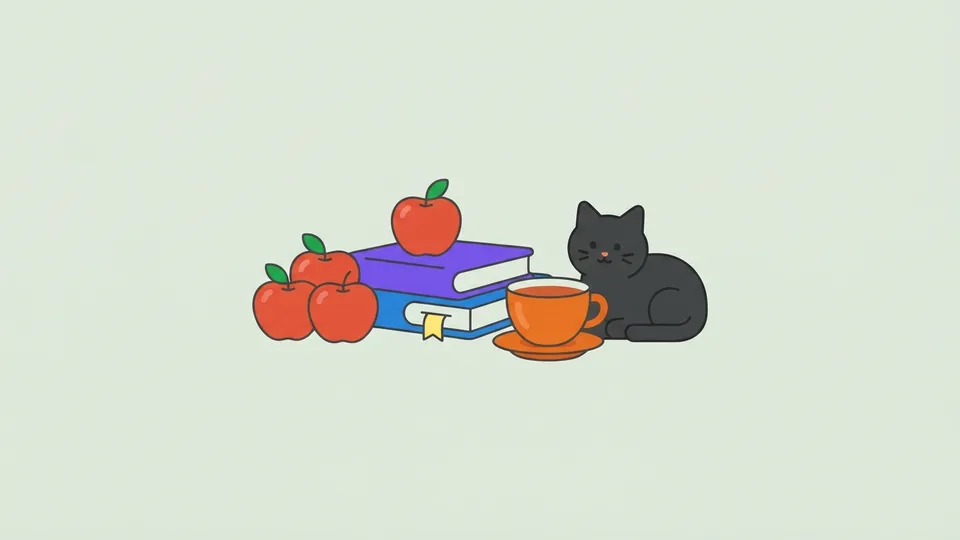
Chinese measure words (also called classifiers) are short words that go between a number and a noun. In English you say "three apples", "two books"; in Chinese it's more like "three pieces of apple", "two volumes of book". English does this only sometimes: "a cup of tea", "a pair of shoes", "two head of cattle". Chinese does it every time, and without the measure word the phrase sounds wrong. At the start a dozen of them is enough, and one fits almost everything. Below: how it works, examples with audio and a table of 59 essential measure words by group, with pinyin and translation.
How measure words work
The pattern never changes: number + measure word + noun. Instead of a number you can have "this", "that" or "how many": 这个 is "this one", 那本书 is "that book", 几个 is "how many".
- 我买了三个苹果wǒmǎilesāngepíngguǒI bought three apples.
- 我想买两本书wǒxiǎngmǎiliǎngběnshūI want to buy two books.
个: the general measure word
goes with people, fruit, days, countries and hundreds of other words. If you can't remember the right measure word, say 个 and you'll be understood. In a phrase 个 usually loses its tone: yí ge, sān ge.
- 我有一个哥哥wǒyǒuyígegēgeI have an older brother.
- 她有一个儿子和一个女儿tāyǒuyígeérzihéyígenǚ’érShe has a son and a daughter.
Note that "a" and "an" also take a measure word in Chinese. "An older brother" is 一个哥哥, literally "one piece older brother". There's no article; "one" plus the measure word does that job.
Measure words for beginners: the first eight
- 本běnbooks, notebooks两本书 — two books
- 杯bēicups, glasses一杯茶 — a cup of tea
- 口kǒufamily members四口人 — four people
- 只zhīanimals一只猫 — a cat
- 件jiànclothes, matters一件衣服 — a piece of clothing
- 位wèipeople, polite这位老师 — this teacher
- 条tiáolong things: fish, roads一条路 — a road
- 块kuàiyuan in speech十块 — ten yuan
A measure word often hints at the shape of the thing. 条 is for long and flexible things: fish, roads, pants. For flat ones (a sheet, a ticket, a table) you use 张 zhāng; for cars, 辆 liàng.
- 一杯茶多少钱?yìbēicháduōshaoqiánHow much is a cup of tea?
- 我有一只猫wǒyǒuyìzhīmāoI have a cat.
- 我买了一件新衣服wǒmǎileyíjiànxīnyīfuI bought a new piece of clothing.
- 你家有几口人?nǐjiāyǒujǐkǒurénHow many people are there in your family?
Why 一 is read in different ways
In these phrases "one" sounds sometimes like yí, sometimes like yì. That's a tone rule: before a fourth tone 一 takes the second tone (一个 yí ge, 一件 yí jiàn), before the others it takes the fourth (一杯 yì bēi, 一只 yì zhī). More in the article on tones.
Chinese measure words list: a table
The full list of Chinese measure words runs to several hundred, but about sixty do most of the work in everyday speech. Those are the ones in the table. Each comes with an example built on "number + measure word + noun". Tap a word in the first column to hear how it's read.
| Word and pinyin | Used for | Example | Translation |
|---|---|---|---|
| General | |||
| people, objects and anything without a word of its own | 三个人 sāngerén | three people | |
| some, an unspecified amount | 一些水果 yìxiēshuǐguǒ | some fruit | |
| kinds, sorts | 两种茶 liǎngzhǒngchá | two kinds of tea | |
| People | |||
| people, polite | 一位老师 yíwèilǎoshī | a teacher | |
| people by occupation, formal | 三名学生 sānmíngxuésheng | three students | |
| family members | 四口人 sìkǒurén | four people in the family | |
| Animals | |||
| small animals, birds | 一只猫 yìzhīmāo | a cat | |
| fish, snakes, dogs | 两条鱼 liǎngtiáoyú | two fish | |
| cattle, large livestock | 一头牛 yìtóuniú | a cow (one head of cattle) | |
| horses | 三匹马 sānpǐmǎ | three horses | |
| Flat and long things | |||
| flat things: sheets, tickets, tables, beds | 两张票 liǎngzhāngpiào | two tickets | |
| long and flexible: roads, rivers | 一条路 yìtiáolù | a road | |
| long and thin: sticks, bananas, hairs | 一根香蕉 yìgēnxiāngjiāo | a banana | |
| pens, pencils | 一支笔 yìzhībǐ | a pen | |
| slices, thin pieces, pills | 两片面包 liǎngpiànmiànbāo | two slices of bread | |
| pieces, chunks | 一块蛋糕 yíkuàidàngāo | a piece of cake | |
| Books and paper | |||
| books, notebooks, magazines | 两本书 liǎngběnshū | two books | |
| pages | 三页纸 sānyèzhǐ | three pages | |
| articles, essays, texts | 一篇文章 yìpiānwénzhāng | an article | |
| letters | 一封信 yìfēngxìn | a letter | |
| copies, portions | 一份报纸 yífènbàozhǐ | a newspaper (one copy) | |
| Clothes and pairs | |||
| tops and upper-body clothing; matters, affairs | 一件衣服 yíjiànyīfu | a piece of clothing | |
| pants, skirts | 一条裤子 yìtiáokùzi | a pair of pants | |
| pairs: shoes, socks, chopsticks | 一双鞋 yìshuāngxié | a pair of shoes | |
| pairs and sets: glasses, gloves | 一副眼镜 yífùyǎnjìng | a pair of glasses | |
| sets, suits | 一套西装 yítàoxīzhuāng | a suit | |
| couples, matching pairs | 一对夫妻 yíduìfūqī | a married couple | |
| Food and dishes | |||
| cups, glasses | 一杯茶 yìbēichá | a cup of tea | |
| 瓶 píng | bottles | 一瓶水 yìpíngshuǐ | a bottle of water |
| bowls | 一碗米饭 yìwǎnmǐfàn | a bowl of rice | |
| plates, dishes | 一盘饺子 yìpánjiǎozi | a plate of dumplings | |
| a mouthful, a sip, a bite | 喝一口水 hēyìkǒushuǐ | take a sip of water | |
| meals | 一顿饭 yídùnfàn | a meal | |
| Vehicles and machines | |||
| cars, bicycles | 一辆车 yíliàngchē | a car | |
| planes | 一架飞机 yíjiàfēijī | a plane | |
| machines, devices | 一台电脑 yìtáidiànnǎo | a computer | |
| movies, phones | 一部电影 yíbùdiànyǐng | a movie | |
| Buildings and places | |||
| businesses, shops, companies | 一家饭店 yìjiāfàndiàn | a restaurant | |
| mountains, bridges, large buildings | 一座山 yízuòshān | a mountain | |
| rooms | 两间房间 liǎngjiānfángjiān | two rooms | |
| floors, layers | 三层楼 sāncénglóu | three floors | |
| schools, universities, hospitals | 一所学校 yìsuǒxuéxiào | a school | |
| Events and times | |||
| times, occurrences | 去过一次 qùguoyícì | have been once | |
| times, from start to finish | 再说一遍 zàishuōyíbiàn | say it again | |
| trips there and back | 去一趟 qùyítàng | make a trip | |
| matches, shows, performances | 一场比赛 yìchǎngbǐsài | a match | |
| class periods | 两节课 liǎngjiékè | two classes | |
| school subjects, courses | 一门课 yìménkè | a course, a subject | |
| Five more common ones | |||
| things with a handle: chairs, umbrellas, knives | 一把椅子 yìbǎyǐzi | a chair | |
| trees | 一棵树 yìkēshù | a tree | |
| flowers, clouds | 一朵花 yìduǒhuā | a flower | |
| songs, poems | 一首歌 yìshǒugē | a song | |
| sentences, lines | 一句话 yíjùhuà | a sentence | |
| Money and measures | |||
| yuan, in speech | 十块钱 shíkuàiqián | ten yuan | |
| a tenth of a yuan, in speech | 五毛钱 wǔmáoqián | five mao (50 fen) | |
| a hundredth of a yuan | 一分钱 yìfēnqián | one fen | |
| jin, half a kilo | 两斤苹果 liǎngjīnpíngguǒ | a kilo of apples (two jin) | |
| kilogram | 五公斤水果 wǔgōngjīnshuǐguǒ | five kilos of fruit | |
| meter | 一百米 yìbǎimǐ | a hundred meters | |
| kilometer | 五公里 wǔgōnglǐ | five kilometers | |
| years of age | 八岁 bāsuì | eight years old | |
| days | 三天 sāntiān | three days | |
| years | 两年 liǎngnián | two years | |
Three words appear in the table more than once, and that's not a mistake. 条 counts fish, roads and pants alike: anything long. 口 is both a family member and a mouthful. 块 is a chunk and, in speech, a yuan, much like "buck" for a dollar; in writing and on price tags the yuan is .
The words in the last group work as measure words themselves, so no second one is needed after them: 三天 is "three days", 八岁 is "eight years old", 两年 is "two years", no 个. How to say the numbers themselves is in the article on Chinese numbers.
How to choose a measure word
- Look at the shape. Flat is 张, long and flexible is 条, long and rigid is 根, a chunk is 块. This rule guesses right more often than you'd think.
- Containers count what's in them. 一杯茶 is a cup of tea, 一碗米饭 is a bowl of rice, 一瓶水 is a bottle of water. Exactly as in English.
- Pairs come in different kinds. 双 is two identical things: shoes, socks, chopsticks. 副 is one thing made of two parts, or a set: glasses, gloves. 对 is a couple of people or a matching pair of ornaments. And pants, a "pair" in English, are one long thing in Chinese: 一条裤子.
- Not sure? Say 个. It will sound simpler than it should, but it won't be a serious mistake.
How to learn measure words
Not as a list, but in pairs of "measure word + noun": 一杯茶, 两本书, 一只猫. A pair sticks as one expression, and later the measure word comes out by itself. Most words in the table have their own page with audio and examples, for instance 个. The HSK 1 words with translations are in the HSK 1 word list, and where the measure word goes in a sentence is covered in the article on word order.
Count things in Chinese
In the lessons measure words come one at a time: in shopping, in talk about family and things. Free during the beta with an account.
Start for free