Chinese New Year: when it is and how to say Happy New Year
Chinese New Year, also called Lunar New Year, is China's biggest holiday: for many families it's Thanksgiving, Christmas and New Year's Eve rolled into one. In Chinese it's called 春节 (Chūnjié), "the Spring Festival", or simply . Below: when it is, how it's celebrated and what people say to each other.
When is Chinese New Year
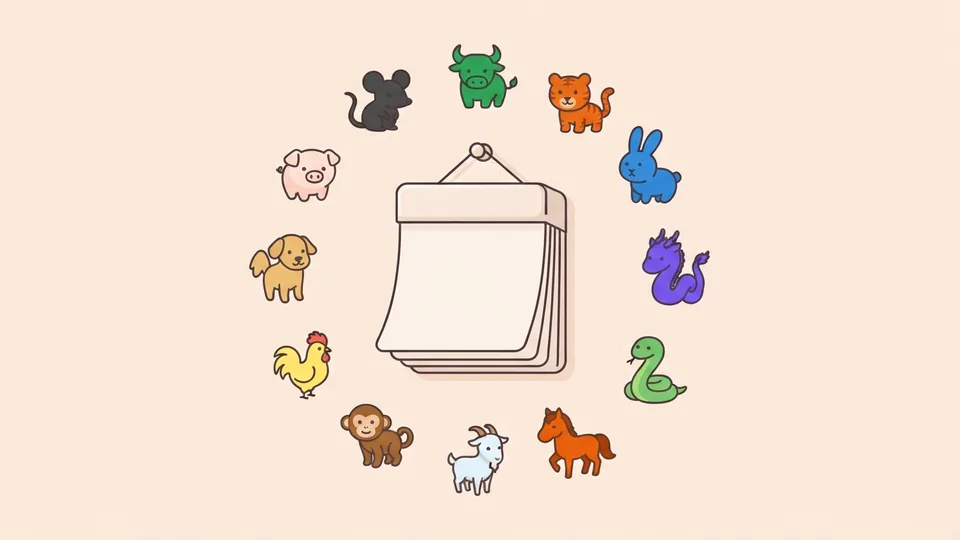
The holiday follows the lunar calendar, so the date changes every year: it falls on a new moon between January 21 and February 20. Each year is linked to one of the twelve animals of the Chinese zodiac.
Officially, China gets about a week off, and the State Council announces the exact days off near the end of the previous year. The celebration itself lasts two weeks, up to the Lantern Festival on the fifteenth day.
How Chinese New Year is celebrated
- The trip home. People travel to their parents for the holiday. It's the largest human migration in the world, called 春运 (chūnyùn), and train tickets sell out weeks ahead.
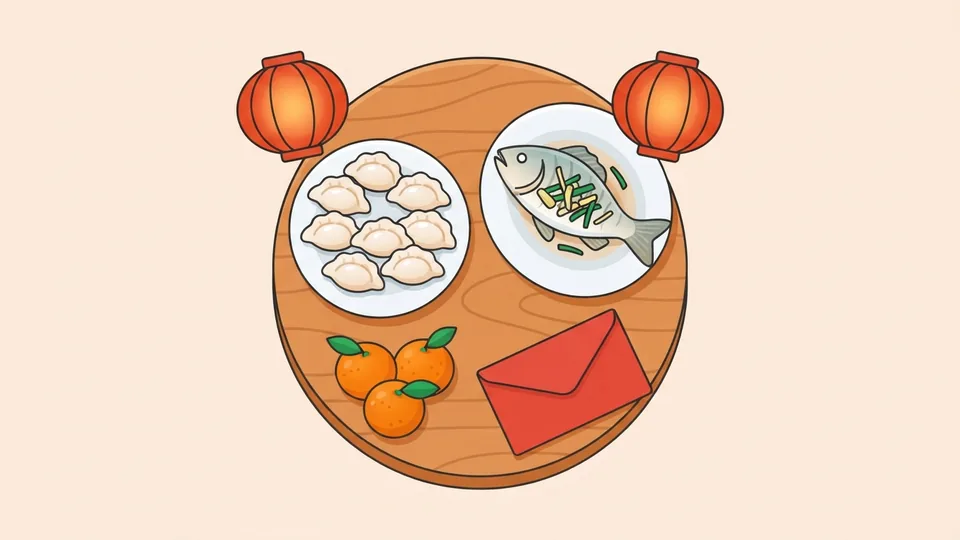
- New Year's Eve dinner. On the evening before the New Year, 除夕 (chúxī), the whole family gathers at the table. In the north, people always make , and there's too: 鱼 sounds like 余, "surplus", and the wish 年年有余 means "may every year bring more than enough".
- The color red. According to legend, the monster Nian (written with the same character as ) is afraid of red and loud noise. So homes are decorated with red lanterns and paired verses on the doors, 春联, and at midnight people set off firecrackers, where it isn't banned.
- Red envelopes. Older relatives give children and unmarried young people a with money. These days red envelopes are also sent on the messaging app WeChat.
- An upside-down 福. The character 福, "good fortune", is stuck on the door upside down: "upside down" (倒 dào) sounds like "has arrived" (到 dào).
- 快要过年了。kuàiyàoguòniánleit's almost New Year
- 你回家过年吗?nǐhuíjiāguòniánmaare you going home for New Year?
- 我们全家都喜欢吃饺子。wǒmenquánjiādōuxǐhuanchījiǎozimy whole family loves dumplings
How to say Happy Chinese New Year
- 新年快乐xīnniánkuàilèHappy New Year!
- 春节快乐chūnjiékuàilèHappy Spring Festival!
- 过年好guòniánhǎohappy holidays!how people greet each other during the festival
- 恭喜发财gōngxǐfācáiwishing you wealth and prosperity!in Cantonese, the familiar gung hei fat choi
- 万事如意wànshìrúyìmay everything go as you wish
- 身体健康shēntǐjiànkānggood health
Greetings are often strung together: 新年快乐,身体健康,万事如意! The phrase "Happy New Year", broken down with a recording, is on the page "Happy New Year" in Chinese, and more wishes for every occasion are in the article Chinese wishes and blessings.
The Lantern Festival
On the fifteenth day, the first full moon of the year, comes 元宵节 (Yuánxiāo jié), the Lantern Festival. In the evening people light lanterns, solve the riddles written on them and eat sweet glutinous rice balls, 汤圆 (tāngyuán) or 元宵. That's the end of the New Year celebrations.
Welcome the Year of the Goat in Chinese
The Spring Festival is less than four months away. Five minutes a day, and by February you can greet your friends yourself. Free during the beta with an account.
Start for free