Chinese wishes and blessings: happy birthday, holidays and congratulations
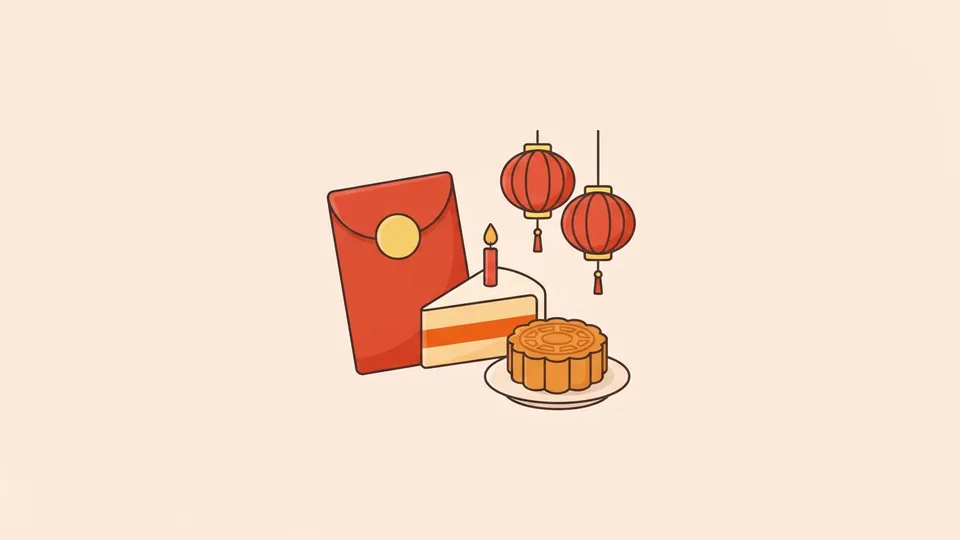
Most Chinese wishes are built from two parts: the name of the occasion and the word . "Happy birthday" is 生日快乐 (shēngrì kuàilè), "Happy New Year" is 新年快乐 (xīnnián kuàilè), "Happy Mid-Autumn Festival" is 中秋节快乐 (Zhōngqiū jié kuàilè). Below are Chinese greetings and wishes with pinyin and translation: for birthdays, holidays and weddings, plus wishes that work for any occasion.
How a Chinese greeting is built
Learn three patterns and you can congratulate a Chinese friend on almost anything.
- Occasion + 快乐. Literally "happy …", just like in English: 生日快乐, 新年快乐, and 节日快乐 "happy holiday" for when you can't remember what the holiday is called. The same pattern gives you "Merry Christmas": 圣诞快乐 (Shèngdàn kuàilè).
- 祝 + person + wish. goes first: 祝你… "I wish you…", 祝您… the same, politely, 祝你们… "I wish you all…". Any wish can follow.
- Four-syllable wishes. Set phrases like 万事如意 or 身体健康 are strung together one after another: the more, the warmer.
There are also and . You use them for something that has already happened: a wedding, a new job, a win. 祝, on the other hand, is a wish for the future. That's why you "wish" someone a happy birthday (祝你生日快乐) but "congratulate" them on a promotion (恭喜). English draws the same line between "best wishes" and "congratulations".
How to say happy birthday in Chinese
- 生日快乐!shēngrìkuàilèhappy birthday!
- 祝你生日快乐!zhùnǐshēngrìkuàilèI wish you a happy birthday!
- 祝你身体健康!zhùnǐshēntǐjiànkāngI wish you good health!
- 祝您健康长寿!zhùnínjiànkāngchángshòuI wish you health and a long life!to older people: parents, grandparents, a teacher
For a friend, 生日快乐 plus a couple of wishes from the table below is plenty: 祝你生日快乐,天天开心! With older people you use the polite 您 and wish them health and a long life above all. For an elderly person's milestone birthday there is a formal line, 福如东海,寿比南山 (fú rú dōng hǎi, shòu bǐ nán shān): "happiness as vast as the Eastern Sea, a life as long as the Southern Mountains". Don't say it to someone your age: it will sound like a joke about getting old.
The phrase broken down word by word, plus questions like "when is your birthday?", is on the page "Happy birthday" in Chinese.
Chinese New Year and Spring Festival greetings
On January 1 people say 新年快乐. For Chinese New Year, the Spring Festival, they add 春节快乐 and a whole string of wishes about money, health and plenty.
- 新年快乐xīnniánkuàilèHappy New Year!
- 春节快乐chūnjiékuàilèHappy Spring Festival!
- 恭喜发财gōngxǐfācáiwishing you wealth and prosperity!
- 年年有余niánniányǒuyúmay every year bring more than enough
They're often joined by 万事如意 and 身体健康: 新年快乐,身体健康,万事如意! Where the fish in 年年有余 comes from, what the red envelopes are for and when the holiday falls in the next few years is in the article Chinese New Year, and the recording of the phrase is on the page "Happy New Year" in Chinese.
Mid-Autumn Festival and National Day greetings
The Mid-Autumn Festival, 中秋节 (Zhōngqiū jié), falls on the 15th day of the eighth lunar month, usually in September or early October. That night the moon is full, the family gets together, eats and looks at the moon. The key word of the festival is , so the wish is for everyone to be together.
- 中秋节快乐!zhōngqiūjiékuàilèHappy Mid-Autumn Festival!
- 中秋快乐!zhōngqiūkuàilèthe same, shorter: more common in messages
- 阖家团圆héjiātuányuánmay the whole family be togetheralso written 合家团圆, read the same way
- 晚上我们一边吃月饼一边赏月。wǎnshangwǒmenyìbiānchīyuèbingyìbiānshǎngyuèin the evening we eat mooncakes and admire the moon
A ready-made Mid-Autumn greeting: 中秋快乐,阖家团圆! For a coworker or a teacher: 祝您中秋节快乐,身体健康!
National Day, 国庆节 (Guóqìng jié), is October 1: on that day in 1949 the People's Republic of China was proclaimed. The whole country gets about a week off, known as the "Golden Week". The greetings are simple: 国庆节快乐 (Guóqìng jié kuàilè), or shorter, 国庆快乐. In conversation the holiday is just .
- 国庆节快乐!guóqìngjiékuàilèHappy National Day!
- 十月一号是国庆。shíyuèyīhàoshìguóqìngOctober 1 is National Day
Some years the Mid-Autumn Festival falls in the same days. Then people wish each other a happy double holiday: 中秋国庆双节快乐.
Congratulations on a wedding, a baby, graduation or a new job
This is where 恭喜 comes in: the event has already happened and you're happy about it. Doubled, 恭喜恭喜! sounds warmer and more casual.
- 新婚快乐!xīnhūnkuàilècongratulations to the newlyweds! (literally "happy new marriage")
- 百年好合bǎiniánhǎohéa hundred years of love and harmony
- 祝愿你们永远幸福!zhùyuànnǐmenyǒngyuǎnxìngfúI wish you happiness forever!
- 早生贵子zǎoshēngguìzǐmay you soon have a childtraditional; these days not said to every couple
- 恭喜你找到了新工作!gōngxǐnǐzhǎodàolexīngōngzuòcongratulations on your new job!
- 祝贺你获奖!zhùhènǐhuòjiǎngcongratulations on the award!
- 毕业快乐!bìyèkuàilèhappy graduation!
- 前程似锦qiánchéngsìjǐna bright future aheadto graduates and people moving on to a new job
For a new baby: 恭喜你当爸爸了! (gōngxǐ nǐ dāng bàba le), "congratulations, you're a dad!", and to the mom, 恭喜你当妈妈了! There are also formal phrases for cards: 喜得贵子 (xǐ dé guì zǐ) for the birth of a son and 喜得千金 (xǐ dé qiān jīn) for the birth of a daughter.
Chinese wishes for any occasion
Put these after 祝你, or simply list them with commas after the greeting. Learn two or three and you're covered for a birthday, New Year and a card for a coworker.
| Wish | Pinyin | Meaning | When to say it |
|---|---|---|---|
| 身体健康 | shēntǐjiànkāng | good health | To anyone, any time; to older people first of all |
| 万事如意 | wànshìrúyì | may everything go as you wish | New Year, birthdays, a card for a coworker |
| 心想事成 | xīnxiǎngshìchéng | may your wishes come true | Birthdays, New Year, the start of something new |
| 一切顺利 | yíqièshùnlì | may everything go smoothly | Before an exam, a trip, a move, a new job |
| 天天开心 | tiāntiānkāixīn | be happy every day | To friends and people your age, in messages |
| 工作顺利 | gōngzuòshùnlì | success at work | To coworkers, partners, someone starting a new job |
| 学习进步 | xuéxíjìnbù | progress in your studies | To school and university students |
- 愿你一切顺利!yuànnǐyíqièshùnlìmay all go well for you!愿 is a bookish "may…": for a card or a toast
- 祝你好运!zhùnǐhǎoyùngood luck!
How to wish someone luck before an exam or a trip is on the page "Good luck" in Chinese.
Writing a greeting: what to reply and what to avoid
In a message, a greeting is short: the greeting itself plus two or three four-syllable wishes. For example: 生日快乐!祝你身体健康,万事如意! To an older person, a teacher or a business partner, write 您 instead of 你 and start with 祝您. Emoji and stickers are perfectly normal in Chinese chats, and on WeChat the words often come with a holding a small "lucky" amount.
When someone congratulates you, thank them and return the wish:
- 谢谢!xièxiethank you!
- 谢谢你的祝福!xièxienǐdezhùfúthank you for your kind wishes!
- 也祝你新年快乐!yězhùnǐxīnniánkuàilèHappy New Year to you too!也 means "too"; after 也祝你, repeat what they wished you
- 同乐!tónglèsame to you! (in reply to "…快乐" on a shared holiday)
Now for what is traditionally avoided in greetings and gifts. The reason is almost always a word that sounds the same:
- Clocks. "To give a clock", 送钟 (sòng zhōng), sounds exactly like 送终, "to attend someone's deathbed". Wall and desk clocks aren't given as gifts, especially to older people.
- The number four. Four items as a gift, or an amount ending in four in a red envelope, are best avoided: "four" sounds like "death". More in the article Lucky and unlucky numbers in China.
- Pears and umbrellas. sounds like 离, "to part", so couples aren't given pears and don't split one pear between two. recalls 散 (sàn), "to break up, scatter".
- White envelopes. Holiday money goes in a red envelope; white is the color of mourning.
How strictly people follow this depends on the family and the generation: young people in big cities are relaxed about it. But if you don't know someone well, better not to risk it.
Phrases with audio
Everyday phrases like "happy birthday", "Happy New Year" and "good luck" have pages of their own, with a recording of the pronunciation.
Open the phrases