Telling time in Chinese: the clock, days of the week and months
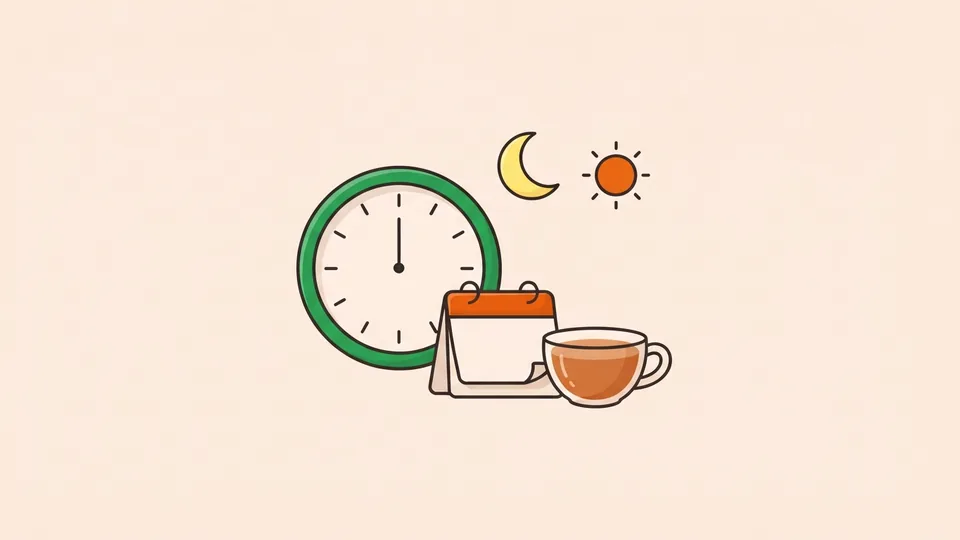
Telling time in Chinese is simple: numbers plus a handful of words. If you know the numbers up to twelve, you can already say the month, the day of the week and the hour; you only need to learn which word goes where. One rule covers it all: from the biggest unit to the smallest.
The order: from big to small
In English you say "at 8 p.m. on Friday, October 2". Chinese goes the other way round: first the year, then the month, the date, the day of the week, the part of the day, and the hour at the very end.
- 今天十月二号星期五jīntiānshíyuèèrhào,xīngqīwǔToday is Friday, October 2.
And the time goes before the verb, not after it: not "I eat breakfast at eight" but "I at eight eat breakfast".
What time is it in Chinese
- 点diǎno’clock
- 分fēnminute (on the clock)
- 半bànhalf
- 现在xiànzàinow
The hour is a number plus 点: 八点, "eight o'clock". Minutes are a number plus 分: 八点十分, "eight ten". Half past is 半: 八点半, "eight thirty". To ask the time, say . There's also , like English "a quarter past": 八点一刻 is "a quarter past eight".
- 我八点吃早饭wǒbādiǎnchīzǎofànI have breakfast at eight.
- 我九点上班六点下班wǒjiǔdiǎnshàngbān,liùdiǎnxiàbānI start work at nine and finish at six.
- 你几点起床?nǐjǐdiǎnqǐchuángWhat time do you get up?
Morning, afternoon and evening
The part of the day goes before the hour: "evening eight o'clock" is 8 p.m. It does the job of English a.m. and p.m., so you won't mix up morning and evening without the 24-hour clock.
- 早上zǎoshangearly morning
- 上午shàngwǔmorning, a.m.
- 中午zhōngwǔnoon, midday
- 下午xiàwǔafternoon, p.m.
- 晚上wǎnshangevening, night
- 我们晚上八点吃晚饭wǒmenwǎnshangbādiǎnchīwǎnfànWe have dinner at eight in the evening.
Days of the week in Chinese
You barely need to learn the days of the week: it's the word 星期, "week", plus the number of the day. Monday is 星期一, "week-one", Tuesday 星期二, and so on up to Saturday, 星期六. The Chinese week starts on Monday. Only Sunday has no number: 星期天, or in writing 星期日.
- 星期xīngqīweek
- 星期一xīngqīyīMonday
- 星期二xīngqī’èrTuesday
- 星期三xīngqīsānWednesday
- 星期四xīngqīsìThursday
- 星期五xīngqīwǔFriday
- 星期六xīngqīliùSaturday
- 星期天xīngqītiānSunday
- 今天星期几?jīntiānxīngqījǐWhat day is it today?
- 我们星期六下午见吧wǒmenxīngqīliùxiàwǔjiànbaLet’s meet on Saturday afternoon.
Months and dates
A month is a number plus 月, "moon, month": January is 一月, "month one", October 十月, December 十二月. No names to memorize. The day of the month is a number plus 号 in speech or 日 in writing. To ask "what's the date?", you use the same words with 几, "how many".
- 今天几月几号?jīntiānjǐyuèjǐhàoWhat’s the date today?
- 今天十月二号jīntiānshíyuèèrhàoToday is October 2.
Years
A year is read digit by digit, like a phone number, plus 年: 2026 is "two-zero-two-six year", not "twenty twenty-six". Three more words come in handy right away: , , .
- 今年是二零二六年jīnniánshìèrlíngèrliùniánThis year is 2026.
How to remember it
Say in Chinese what you see every day: the time on the clock, the date on your phone, the day of the week. The core words of this article are on the HSK 1 word list, and how the numbers themselves are read is in the guide to Chinese numbers.
Learn to talk about time
The Time and Day topic in the course: the clock, dates and your daily routine, in short lessons with audio. Free during the beta.
Start for free