Chinese tongue twisters with pinyin and translation
Chinese tongue twisters are short phrases packed with syllables that differ by a single sound or a single tone: sì and shí, mā and mǎ, pú and bù. Below are six of the best-known Chinese tongue twisters with pinyin and English translation — and for each one, what exactly it trains and how to work on it. The twisters themselves are given as text, and the syllables you need to tell apart can be played: press a syllable to hear it.
Why learn tongue twisters in Chinese
An English tongue twister like “She sells seashells by the seashore” is about speed. In a Chinese one, speed comes last: what matters is that similar syllables stay different. If your “four” and “ten” sound the same, a shopkeeper won’t know how much you are asking for. A tongue twister puts two such syllables side by side and won’t let you blur them.
Work on each one in three steps, and don’t move on to the next step while you still stumble:
- Syllable by syllable. Slowly, with a pause after each syllable, exaggerating the tone. First listen to the hard syllables on their own — the buttons under each twister, or the pinyin chart, where every syllable has a recording.
- Word by word. Join the syllables into words and short chunks: “shí sì”, “sì shí”. Pause only between chunks.
- The whole thing. At normal speaking speed first. Speed up only once you have said it cleanly three times in a row. If you slip, go back a step.
“Four is four, ten is ten”: the classic Chinese tongue twister
- 四是四,十是十,十四是十四,四十是四十sìshìsì,shíshìshí,shísìshìshísì,sìshíshìsìshíFour is four, ten is ten, fourteen is fourteen, forty is forty.
The most famous Chinese tongue twister: shi against si. It trains two things at once. The first is the consonants s and sh. For s the tongue tip sits at the teeth, as in English s. For sh the tip is raised and pulled back towards the roof of the mouth; it sounds like English sh, but with the tongue curled further back. There is no “ee” vowel in these syllables: the voice simply carries on the consonant, giving something like “sz” and “shr”.
The second is tones. There are only two words here, and , plus the linking verb , which differs from “ten” only by its tone. Listen and compare:
Tip: first say just “sì shì sì” and “shí shì shí” on their own. The hard part is “shí sì shì shí sì”, where the tongue changes position four times. The numbers in this twister are covered in the article on Chinese numbers.
The Chinese tongue twister about mom and the horse
- 妈妈骑马,马慢,妈妈骂马māmaqímǎ,mǎmàn,māmamàmǎMom rides a horse, the horse is slow, mom scolds the horse.
This one is pure tone practice. The consonant and vowel are almost always the same, ma, and only the melody changes: is a first tone plus a neutral one, is a third tone, a fourth. Mix them up and suddenly the horse is scolding mom.
Tip: watch the ending “mà mǎ” — after the sharp fall, your voice has to stay down for the low third tone. If the four tones still get mixed up, read the article on tones first; the third, the trickiest one, has a breakdown of its own.
The grape tongue twister
- 吃葡萄不吐葡萄皮,不吃葡萄倒吐葡萄皮chīpútaobùtǔpútaopí,bùchīpútaodàotǔpútaopíEat grapes without spitting out the skins; don’t eat grapes, yet spit out the skins.
It doesn’t make much sense, but it is built entirely on aspiration. In Chinese, p and b, t and d differ not by voicing, as in English, but by breath: p and t come with a clear puff of air, b and d without one. English has the same puff in “pin” and “top” and none in “spin” and “stop” — Chinese just uses it to tell words apart. Hold your palm in front of your mouth: on pú, pí, tǔ, tao you should feel the air, on bù and dào you shouldn’t.
Tip: the word comes up four times, so practise it on its own: the second syllable is light and short. Then put together the chunks “bù tǔ” and “dào tǔ”, where an aspirated and an unaspirated syllable stand right next to each other.
Three more: phoenixes, “knowing” and Xi Shi
The red phoenix
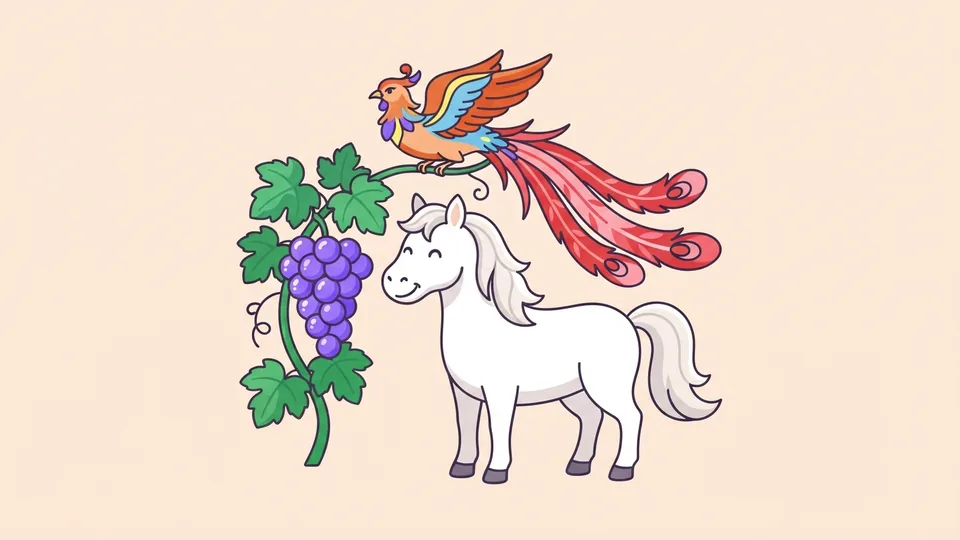
- 红凤凰,粉凤凰,红粉凤凰,花凤凰hóngfènghuáng,fěnfènghuáng,hóngfěnfènghuáng,huāfènghuángRed phoenix, pink phoenix, red-and-pink phoenix, colorful phoenix.
It trains the pair f and h. f is as in English: the lower lip touches the upper teeth. h has nothing to do with the lips; it comes from deep in the mouth and is rougher than English h, close to the ch in Scottish “loch”. The two alternate in every word, and on top of that you have to keep the endings apart: -en in fěn, -eng in fèng, -ong in hóng, -uang in huáng.
If you know, say you know
- 知道就说知道,不知道就说不知道zhīdàojiùshuōzhīdào,bùzhīdàojiùshuōbùzhīdàoIf you know, say you know; if you don’t know, say you don’t know.
Here the work is done by the curled-tongue sounds zh and sh, next to the soft j, for which the tongue tip goes the other way, down behind the lower teeth. A useful check: zh must not slide into z — compare the pair below. All the words are everyday ones, such as , so it is worth learning as a ready-made phrase.
Xi Shi
- 西施死时四十四xīshīsǐshísìshísìXi Shi died at forty-four.
Xi Shi is a legendary beauty of ancient China; the age in the twister was picked for the sound, it is not a historical fact. Seven syllables and three different consonants: the soft x (tongue tip behind the lower teeth, between s and sh), sh and s — plus all four tones. It continues the “four is four” twister, so take it on after that one.
“Shi shi shi”: the story of the lion-eating poet
A text in which every syllable reads shi is often called the hardest Chinese tongue twister. In fact it isn’t a tongue twister but a linguistic joke. It was written in the 20th century by the linguist Yuen Ren Chao (Zhao Yuanren) in Classical Chinese, the old written language in which almost every word is a single character. It is known in English as “Lion-Eating Poet in the Stone Den”, and it begins like this:
- 石室诗士施氏,嗜狮,誓食十狮shíshìshīshìshīshì,shìshī,shìshíshíshīIn a stone den lived a poet named Shi, who loved lions and vowed to eat ten lions.
It goes on like that: read in modern Mandarin, the whole story is the single syllable shi in different tones. On paper you can follow it, since the characters are all different. By ear you can’t: even a native speaker hears only “shi-shi-shi”. The point is that for the old book language, writing in syllables can’t replace characters. Living speech doesn’t have this problem: most of its words have two syllables and don’t merge.
There is no reason for a beginner to learn this text. But it shows the difference between the tones of one syllable perfectly:
Which tongue twister to start with, and how to check yourself
Start with mom and the horse: it has no hard consonants, only tones. Second, “four is four”: you’ll need it as soon as you start saying prices and dates. Then the grapes, for aspiration. Leave the phoenixes and Xi Shi until the first three come out without a hitch. One tongue twister a day for five minutes is enough.
Checking yourself by ear is hard: your own voice sounds different from the inside than from the outside. Record yourself on your phone and compare with the native speaker’s syllables. If a sound won’t come at all, find out how it is made — in the articles on the sounds of Chinese and on pronunciation in general.
From tongue twisters to words
The Pronunciation section checks your tones on everyday words: say a word into the microphone and see a syllable-by-syllable breakdown.
Try it