Chinese pronunciation: where to start and how to get it right
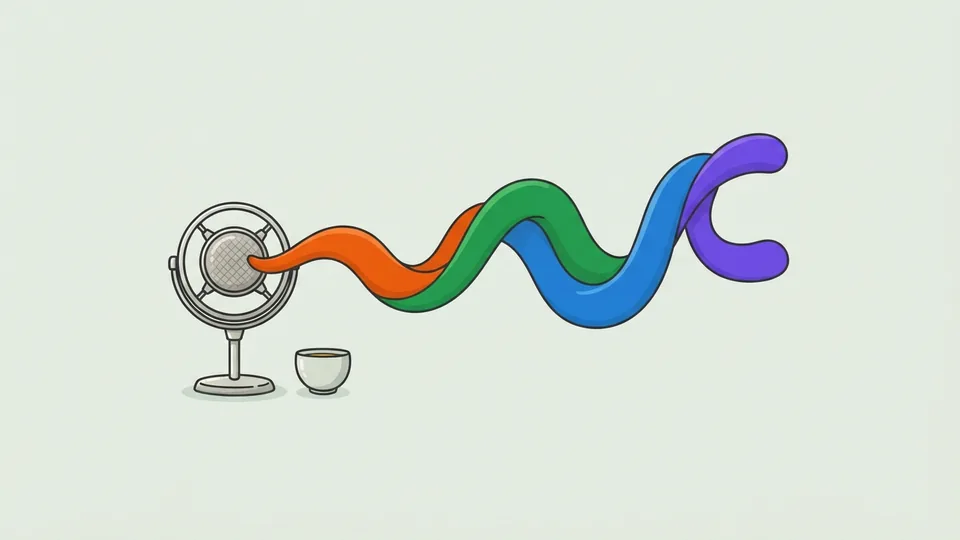
Chinese pronunciation is best set up at the very start, and in order: single syllables first, then two-syllable words, then short phrases. Only a handful of its sounds don’t exist in English. The harder part is different: every syllable is said with its own melody, its tone, and you have to keep that melody when syllables run together. Below: what Chinese pronunciation is made of, where English speakers usually stumble and what to do in the first weeks.
What Chinese pronunciation is made of
A Chinese word is one or more syllables, and each syllable has three parts: an initial (the consonant), a final (the vowel part) and a tone. In the syllable the initial is h, the final is ao and the tone is the third. All of this is written in Latin letters — pinyin — with the tone shown as a mark over the vowel.
The language has few syllables — about four hundred without tones, and no new ones will turn up: they’re all in the pinyin chart, and you can listen to each one. So the question “how do you pronounce Chinese words” comes down to two skills: saying syllables cleanly and joining their tones correctly. Initials and finals in detail — in our article on Chinese phonetics.
- 你好nǐhǎohellotwo syllables, both third tone
- 谢谢xièxiethank youfourth tone and neutral
- 今天jīntiāntodaytwo first tones
- 老师lǎoshīteacherthird tone and first
Chinese pronunciation for beginners: the three difficulties
English-speaking learners almost always make the same mistakes. There are three, and it helps to know about each in advance.
Tones, especially the third
A single syllable in the right tone comes quickly. The trouble starts in words: tones stand side by side and affect each other. The third tone causes the most. Textbooks draw it as “down and up”, but it only sounds like that on its own or at the end of a phrase. Before another syllable it simply stays low: in the first syllable doesn’t rise — it makes room for the high second one straight away. And when two third tones meet, the first one is said as a second tone: sounds like “ké yǐ”. There’s a separate article on the third tone, and an overview of all four in our article on Chinese tones.
Look-alike pairs and ü
Pinyin has three pairs of consonants that an English ear first hears as the same “j”, “ch” and “sh”: zh and j, ch and q, sh and x. The difference is in the tongue. For zh, ch, sh the tip of the tongue is raised and pulled slightly back, toward the roof of the mouth, and the sound is hard. For j, q, x the tip rests behind the lower teeth, the middle of the tongue rises to the palate and the lips are spread as in a smile — the sound is soft. Compare:
You get the vowel ü by saying “ee” and, without moving your tongue, rounding your lips as for “oo” — the French “u” in “tu” or the German “ü”. It tells words apart from plain u: and . After j, q, x and y the dots aren’t written, but the sound is the same: in and you say ü, not “oo”. All the pairs with descriptions are in our article on Chinese sounds.
English intonation instead of tones
The third mistake is the least noticeable. In English we drop our voice at the end of a statement and raise it in a question — and carry that habit into Chinese. The last syllable of every phrase then “falls”, whatever its tone, and in a question everything drifts upward. English stress adds to it: we hit one syllable hard and swallow the rest, while in Chinese every syllable keeps its full tone. The other side of the same habit is a narrow range: the first tone isn’t high enough, the third isn’t low enough, and the word comes out flat. In Chinese the melody is set by each syllable, not by the sentence as a whole.
Where to start: a plan for the first weeks
It’s easiest to work in three steps. Each takes as long as it takes — move on when the previous step no longer needs effort.
- Syllables. Go through the pinyin chart: listen to and repeat every initial and every final, then one syllable in all four tones in a row — . The goal is to read any syllable written in pinyin without thinking.
- Two-syllable words. Most Chinese words have two syllables, and that’s where the tones of real speech live. Take the first HSK 1 words and watch the move from syllable to syllable: high and high again, low then high, a fall and a rise.
- Phrases. Short ones, three to five syllables. The task is to keep every syllable’s tone and not let English intonation squash the end of the phrase.
- 今天jīntiāntodayhigh, then high again
- 明天míngtiāntomorrowa rise, then high
- 手机shǒujīcell phonelow, then high
- 再见zàijiàngoodbyetwo falls in a row
- 学习xuéxíto studytwo rises in a row
- 朋友péngyoufrienda rise and a neutral tone
- 我是学生wǒshìxuéshengI’m a student.
- 你好吗?nǐhǎomaHow are you?
- 认识你很高兴rènshinǐhěngāoxìngNice to meet you.
Notice the question 你好吗: the voice doesn’t shoot up at the end the way it does in an English question. The particle ma makes it a question, and ma is in the neutral tone — short and quiet.
How to check your Chinese pronunciation online
You can barely hear your own tones from the inside: it feels like your voice went up, but on the recording it stays put. So checking always means comparing with a model.
- Listen to the speaker. Not once, but three or four times in a row, and follow not the sounds but the movement of the voice: where it’s high, where it’s low, where it falls.
- Record yourself. Your phone’s voice recorder is enough. Say the word right after the speaker and play both recordings one after the other — the difference is far easier to hear than while you’re speaking.
- Compare the melody with your eyes. The pitch of a voice can be drawn as a line. When your line sits under the speaker’s, you can see on which syllable they parted: you didn’t reach the top, didn’t go low enough or went the wrong way.
Common pronunciation mistakes and how to fix them
- The first tone too low. Then it blends into the third. Start higher than feels natural and hold the note level to the end of the syllable: .
- A third tone that always rises. It breaks the word into pieces. Inside a word, think of the third tone as simply low: .
- A limp fourth tone. It falls from the very top, short and sharp, like a command — “No!” If you start from the middle, there’s nowhere to fall: .
- A neutral tone said at full strength. The second syllable in and is short and light, with no melody of its own. Don’t stretch it.
- b, d, g as a fully voiced English b, d, g. In the pairs b and p, d and t, g and k the difference isn’t voicing but a puff of air: p, t, k come with a strong breath, b, d, g with none — like the p in “spin” rather than “pin”. Hold your palm to your mouth: on you feel air, on almost none. Chinese p, t, k need an even stronger puff than English ones.
- Reading pinyin as English. The letters q, x, c, z, r don’t stand for the sounds they do in English, and neither do e or the i in shi. Until you’ve learned them, go by the recording, not the letter. Pinyin versus older systems like Wade–Giles — in our article on romanization.
Tongue twisters and other pronunciation drills
Once syllables and words come out right, tongue twisters polish your pronunciation. They’re built from look-alike syllables, so you can’t cheat. The most famous is 四是四,十是十, “four is four, ten is ten”: it alternates , and , so it trains the s — sh pair and two different tones at once. Say it slowly and cleanly; speed will come by itself. A selection with explanations — in our article on Chinese tongue twisters.
And don’t leave pronunciation “for later”: retraining a tone that has set in takes longer than getting it right from the start. Ten minutes a day out loud is enough if you compare yourself with the speaker every time.
Hear your own melody
In the Pronunciation section you say a word into the microphone and see the melody of your voice under the speaker’s, syllable by syllable. Free during the beta.
Open the section