Chinese phonetics: initials, finals and tones
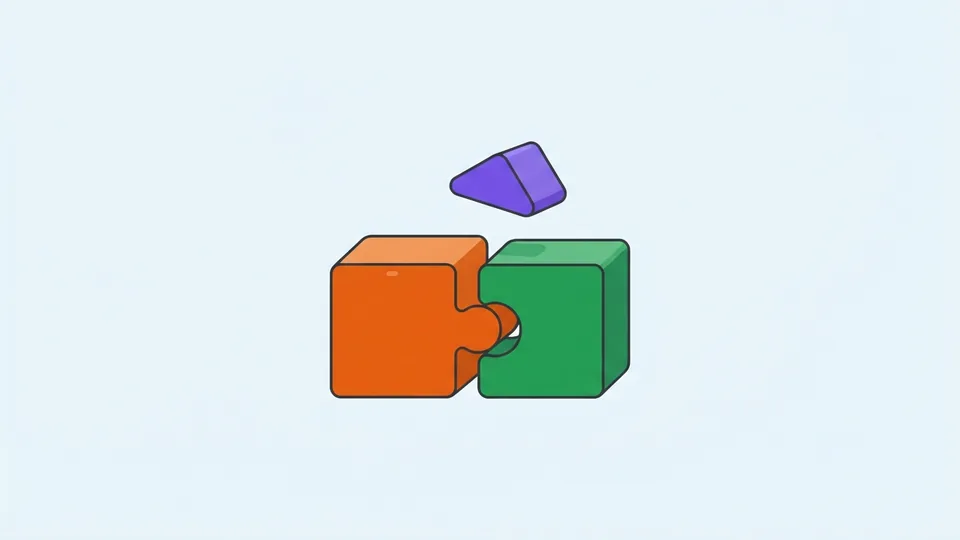
Chinese phonetics is built on the syllable. Every syllable has three parts: the initial — the consonant at the start, the final — everything that comes after it, and the tone — the melody the syllable is said with. There are 21 initials, about 35 finals and four tones. Get to know these three lists and you can read any Chinese word written in pinyin.
How a Chinese syllable works: initial, final and tone
“Initial” and “final” sound like textbook jargon, but they mean something simple: the beginning of the syllable and its ending. In the beginning is m and the ending is a. In the beginning is zh (two letters, one sound) and the ending is ong. The tone sits on top of the ending.
The initial is always a single consonant: Chinese never starts a syllable with two consonants in a row, so nothing like the “str” of “street”. The final is a vowel, a group of vowels, or a vowel with a nasal n or ng at the end. No other consonant can end a syllable. Some syllables have no initial at all, just a final: , .
That is why Chinese has so few syllables: about 400, or about 1,300 if you count the tones. English, by comparison, has many thousands. The whole set fits into one pinyin chart, where you can listen to every syllable.
Chinese initials chart: how to pronounce the 21 consonants
Initials are learned in groups, by where in the mouth the sound is made. Press a syllable to hear it. The English words in the descriptions are only hints: the sounds are close, not identical.
| Group | Initials | Listen | How to say it |
|---|---|---|---|
| Lips | b p m f | b is like the p in “spin” — no puff of air, no voice. p is the p in “pin” with an even stronger puff. m and f are as in English. | |
| Tongue tip | d t n l | The tip of the tongue presses on the ridge behind the upper teeth. d is like the t in “stop”, t like the t in “top” with a puff. n and l are as in English. | |
| Back of the tongue | g k h | The back of the tongue does the work. g is like the k in “skin”, k like the k in “kin” with a puff. h is rougher than English h, close to the ch in Scottish “loch”. | |
| Flat tongue | j q x | The tongue tip rests behind the lower teeth and the middle of the tongue rises to the palate, lips spread as in a smile. j is a soft “j” as in “jeep”, q a soft “ch” as in “cheap” with a puff, x a sound between s and sh. | |
| Curled tongue | zh ch sh r | The tongue tip is raised and curled slightly back. zh is like the j in “judge” said that way without voice, ch like the ch in “church” with a puff, sh like the sh in “shirt” further back, r close to the s in “pleasure”. | |
| Hissing | z c s | The tongue tip is at the teeth. z is like the “ds” in “kids”, c like the “ts” in “cats” with a puff, s is a plain s. |
Two things trip up almost every English speaker.
- b–p, d–t and g–k differ by breath, not by voice. Chinese b is not English b: there is no voice in it. The difference is the puff of air after the consonant. English already has that puff — you just never listen for it. Hold your palm in front of your mouth: on you should feel a burst of air, on almost nothing. The pairs j–q, zh–ch and z–c work the same way.
- The three rows of “s” and “sh” sounds are three tongue positions. In j q x the tongue lies flat and the sound comes out soft. In zh ch sh the tongue tip is raised and pulled back, and the sound is hard. In z c s the tongue tip is right at the teeth. Compare: .
More on the hard consonants in the article on the sounds of Chinese.
Chinese finals: chart and pronunciation
Finals fall into three groups: simple ones of a single vowel, compound ones of two or three vowels, and nasal ones ending in n or ng.
| Group | Finals | Listen |
|---|---|---|
| Simple | a o e i u ü | |
| Compound | ai ei ao ou | |
| ia ie ua uo üe | ||
| iao iou (iu) uai uei (ui) | ||
| Nasal | an en in ün | |
| ang eng ing ong | ||
| ian uan üan iang uang iong |
The nasal group also includes uen, written un after a consonant (), and the rare ueng, which only occurs on its own as the syllable weng. The final er stands apart: it never combines with an initial, but it gives you the word .
What to know about pronouncing the finals:
- e is not the e of “bed”. The lips are unrounded and slightly spread, the tongue pulled back; it sounds roughly like the “u” in “fun” said further back in the throat: . But in ie and üe the same letter sounds close to the e of “yes”: .
- ü is “ee” with rounded lips. Say “ee” and, without moving your tongue, round your lips as if to whistle. It is the vowel of French “tu” or German “über”: . Compare with plain u, like the “oo” in “food”: .
- Compound finals are one syllable, not two. ai, ao and iao glide in a single movement: rhymes with “how”, it is not “ha-o”.
- n and ng are different endings. For n the tongue tip touches the ridge behind the upper teeth. For ng the tip stays down and the back of the tongue rises, as in “song” — with no “g” sound at the end. Compare: , .
- In ian the a sounds like “e”. sounds like “dyen”, not “dyan”. The same goes for üan: .
Which initials and finals combine
Not every initial goes with every final. The chart has many empty cells, and simple rules explain them.
- j q x come only before i and ü. They are followed by finals that start with one of those two vowels: . There are no syllables ja, qo or xa.
- zh ch sh r, z c s and g k h are the opposite. They never combine with finals in i or ü: there is no gi or shü. The i in zhi, chi, shi, ri, zi, ci, si is not “ee” at all. It is a buzz that just prolongs the consonant while the tongue stays put: . A real “ee” is what you hear in and .
- After j q x the dots on ü are dropped. Plain u never follows them, so there is nothing to confuse: you write ju, qu, xu and read them with ü — . The dots stay only after n and l, where both vowels are possible: and , .
There is no need to memorize a list of what is forbidden. Remember the rule for j q x and the “not ee” after zh ch sh r z c s — the rest is visible in the full chart of initials and finals: if a cell is empty, the syllable does not exist.
Pinyin spelling rules: y, w and the short forms iu, ui, un
Pinyin does not always write a final the way it looks in the chart. There are three rules.
- A syllable starting with i is written with y. On their own, i, in and ing get a y in front: yi, yin, ying. In the others the i becomes y: ia → ya, ie → ye, iou → you, ian → yan. Hence , , .
- A syllable starting with u is written with w. A lone u becomes wu; in the others the u becomes w: uo → wo, uei → wei, uen → wen. Examples: , , .
- A syllable starting with ü is written yu, without dots. ü → yu, üe → yue, üan → yuan, ün → yun: , , .
The letters y and w are not initials, just a way of showing where a syllable begins. One more shortcut: after a consonant, the finals iou, uei and uen lose their middle vowel in writing and become iu, ui and un. They are still read in full — the middle vowel is heard, if faintly: , , .
Tone: the third part of the syllable
An initial and a final make a syllable, but not yet a word. A word appears once a tone is added: and are as different to a Chinese ear as “bat” and “bet” are to yours. The tone mark goes over the vowel of the final. How the four tones sound and when they change is covered in the article on Chinese tones.
Chinese phonetics for beginners takes two or three weeks: listen to and repeat every initial and final, then start putting them together into syllables with tones. After that your ear and tongue keep learning from real words. Where to start and how to plan your practice is in the article on Chinese pronunciation.
Every syllable with audio
In the pinyin chart you can listen to every syllable in all four tones, recorded by native speakers.
Open the chart