Family in Chinese: family members and relatives with English meanings
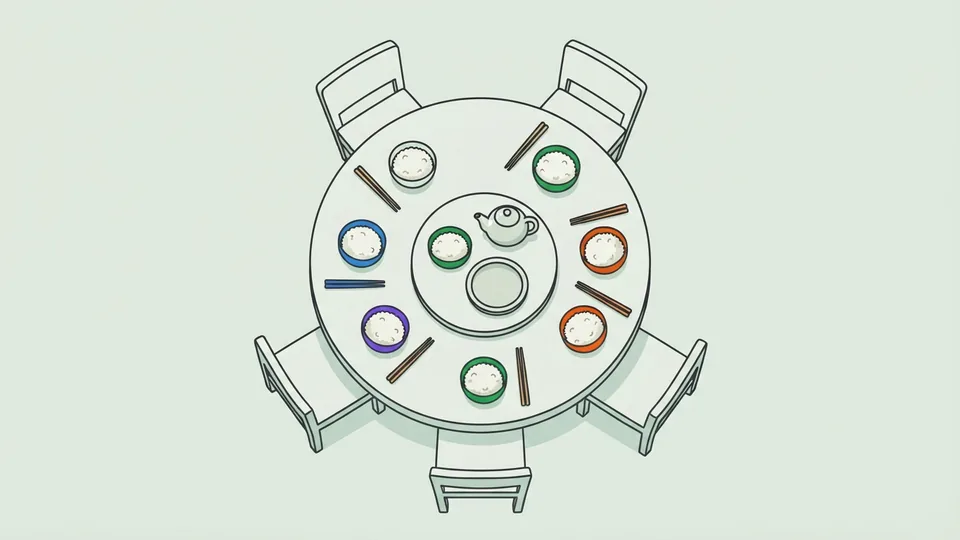
"Mom" in Chinese is 妈妈 māma and "dad" is 爸爸 bàba; those two sound almost the same as in English. The rest is trickier. In English a brother is just a brother, but in Chinese you can't say that: you have to say whether he's older or younger. The same goes for sisters, grandmothers and grandfathers. Chinese family words are more precise than English ones: they tell you straight away who is older and which side of the family someone is on. Below are the family members in Chinese with English meanings, pinyin, a rough pronunciation and audio, and at the end a ready-made short text, "My family".
Family members in Chinese: chart with English meanings
| English | Chinese | Sounds roughly like |
|---|---|---|
| mom | MAH-mah | |
| dad | BAH-bah | |
| parents | foo-moo | |
| older brother | GUH-guh | |
| younger brother | DEE-dee | |
| older sister | JYEH-jyeh | |
| younger sister | MAY-may | |
| grandpa (dad’s side) | YEH-yeh | |
| grandma (dad’s side) | NYE-nye (like "nigh") | |
| son | ARE-dzuh | |
| daughter | nyü-ARE | |
| husband | JAHNG-foo | |
| wife | CHEE-dzuh |
Tap a word to hear it; the link in the first column opens the word's page with stroke order and examples. The rough spellings only hint at the sounds and say nothing about the tones: trust the pinyin and the recordings. Next, let's go through these words group by group.
Parents and children
- 爸爸bàbadad
- 妈妈māmamom
- 儿子érzison
- 女儿nǚ’érdaughter
- 孩子háizichild, children
In 爸爸 and 妈妈 the second syllable is light: short and unstressed, in the neutral tone. 女儿 is literally "woman + child": many Chinese words work like this, their meaning built from the parts.
"Mom" and "dad" are home words in Chinese too: it's what you call your parents and how you talk about them in conversation. On forms, in books and in formal speech they're replaced by and , and both parents together are .
Brother and sister in Chinese: who's older
- 哥哥gēgeolder brother
- 姐姐jiějieolder sister
- 弟弟dìdiyounger brother
- 妹妹mèimeiyounger sister
In everyday speech there's no general word for "brother" or "sister": you always talk about a particular one, older or younger. Brothers together are , sisters , and all siblings at once 兄弟姐妹.
- 我有一个哥哥wǒyǒuyígegēgeI have an older brother.
- 我有两个弟弟wǒyǒuliǎnggedìdiI have two younger brothers.
- 你有弟弟吗?nǐyǒudìdimaDo you have a younger brother?
Grandma and grandpa in Chinese
Your father's parents and your mother's parents have different names, and for your mom's parents there are even two sets of words, a northern one and a southern one.
- 爷爷yéyegrandpa (dad’s side)
- 奶奶nǎinaigrandma (dad’s side)
- 外公wàigōnggrandpa, mom’s side (south)
- 外婆wàipógrandma, mom’s side (south)
- 姥爷lǎoyegrandpa, mom’s side (north)
- 姥姥lǎolaograndma, mom’s side (north)
Textbooks more often use 外公 and 外婆, but both pairs are understood everywhere. Grandchildren are told apart too: and are a son's children, while a daughter's children get the same character 外: 外孙 and 外孙女.
- 我爷爷今年八十岁wǒyéyejīnniánbāshísuìMy grandpa is eighty this year.
- 你奶奶今年多大?nǐnǎinaijīnniánduōdàHow old is your grandma?
Relatives in Chinese: the father's side and the mother's side
The character 外 wài in 外公 and 外婆 means "outer". In the traditional family the surname and the household passed down the male line, so the father's relatives counted as "inner" and the mother's as "outer". That's the main principle: almost every relative has two names, depending on whose side they're on.
- 伯伯bóbouncle: dad’s older brother
- 叔叔shūshuuncle: dad’s younger brother
- 姑姑gūguaunt: dad’s sister
- 舅舅jiùjiuuncle: mom’s brother
- 阿姨āyíaunt: mom’s sister
- 亲戚qīnqirelative
Dad's brothers are also split by age: one older than your father is 伯伯, one younger is 叔叔. The words 叔叔 and 阿姨 are useful outside the family too: children and young people use them to politely address any man or woman of their parents' generation, much like "Uncle" and "Auntie" in many English-speaking families.
English has a single word, "cousin", for all of them; Chinese has eight, but you don't need to memorize a list, just see how it's built. First comes the character for the line: 堂 táng if they're the children of your father's brothers, with the same surname as you; 表 biǎo for everyone else, the children of your father's sisters and the whole of your mom's side. Then comes the usual word for brother or sister, with the age: 堂哥 is an older male cousin on the father's side, 表妹 a younger female cousin on another line. That's eight words from six characters.
- 他是我的一个亲戚tāshìwǒdeyígeqīnqiHe’s a relative of mine.
- 阿姨好!āyíhǎoHello, Auntie!
Husband and wife
- 丈夫zhàngfuhusband
- 妻子qīziwife
- 男朋友nánpéngyouboyfriend
- 女朋友nǚpéngyougirlfriend
丈夫 and 妻子 are neutral words, close to "spouse". When talking about their own partner, Chinese people often say something simpler: 老公 lǎogōng and 老婆 lǎopo, the everyday "hubby" and "wife".
In-laws in Chinese
In English a father-in-law is a father-in-law, whoever's father he is. In Chinese the spouse's parents have different names depending on whose parents they are.
- 公公gōnggongfather-in-law (husband’s father)
- 婆婆pópomother-in-law (husband’s mother)
- 岳父yuèfùfather-in-law (wife’s father)
- 岳母yuèmǔmother-in-law (wife’s mother)
These are words for talking about your in-laws. To their face, people usually call them the same as their own parents, 爸爸 and 妈妈. A married couple together is .
How to talk about your family in Chinese
To ask how many people are in someone's family, Chinese uses a special measure word, 口, "mouth": in the old days a family was counted by the mouths to feed. The answer uses the same word.
- 你家有几口人?nǐjiāyǒujǐkǒurénHow many people are there in your family?
- 她有一个儿子和一个女儿tāyǒuyígeérzihéyígenǚ’érShe has a son and a daughter.
- 他儿子今年六岁tāérzijīnniánliùsuìHis son is six this year.
The word means both "home" and "family": 我家 is "my home" and "my family" at once. And 有 is "to have": 我有… is "I have…".
"My family" in Chinese: a short text with translation
A ready-made text of eight short sentences for beginners. Listen to each one, repeat it aloud, then swap in your own family, their ages and what they do.
- 我家有四口人。wǒjiāyǒusìkǒurénThere are four people in my family.
- 爸爸、妈妈、哥哥和我。bàba,māma,gēgehéwǒDad, Mom, my older brother and me.
- 我父母都是老师。wǒfùmǔdōushìlǎoshīMy parents are both teachers.
- 我爸爸非常忙。wǒbàbafēichángmángMy dad is very busy.
- 我哥哥上高中。wǒgēgeshànggāozhōngMy older brother is in high school.
- 我有哥哥,没有姐姐。wǒyǒugēge,méiyǒujiějieI have an older brother, but no older sister.
- 我爷爷今年八十岁。wǒyéyejīnniánbāshísuìMy grandpa is eighty this year.
- 我很爱我的家人。wǒhěnàiwǒdejiārénI love my family very much.
The text rests on three words: 有, "have", 没有, "don't have", and 都, "all, both". Age is given with no verb: "grandpa this year eighty years". The numbers for ages and for counting relatives are in the guide to Chinese numbers.
How to remember it
Draw your family tree and label everyone in Chinese. Apart from a few colloquial ones, the words in this article are on the HSK 1 and HSK 2 word lists.
Talk about your family
The Family and People topic in the course: you name your relatives, count them and talk about them out loud. Free during the beta.
Start for free