The Chinese symbol for happiness: 福, 幸福 and double happiness 囍
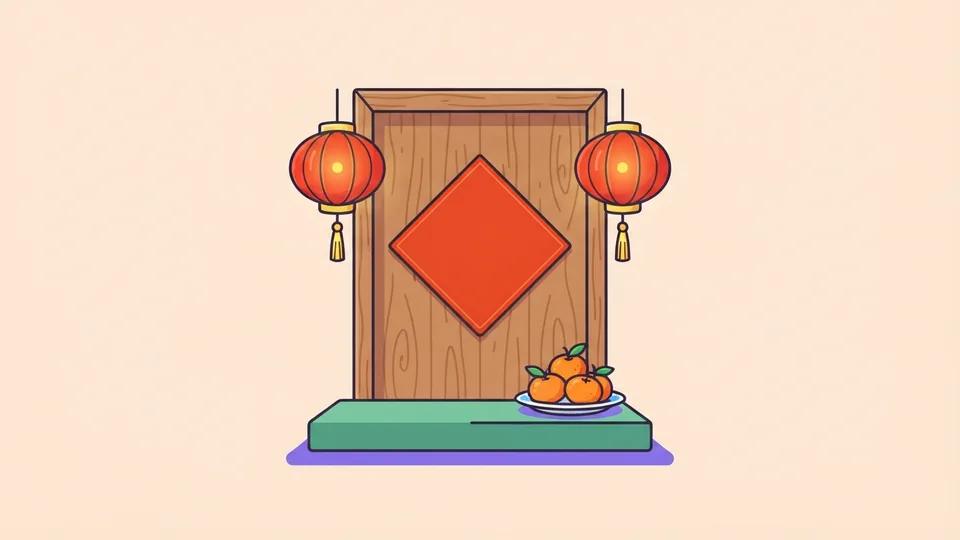
The Chinese symbol for happiness is : one character of thirteen strokes, written on red paper and hung on the front door. But if you want to say "I'm happy", you need a different word, . And at a wedding you'll see a third sign, "double happiness" 囍. Here's how they differ, what they're made of, and which one to choose for a card or a gift.
Which Chinese character means happiness?
English has one "happiness"; Chinese splits it into several words, and they are about different things. One you wish upon a home, another you feel, a third you shout at a party. Here are the four main ones:
| Character | Reading | Shade of meaning | Where you see it |
|---|---|---|---|
| 福 | fú | good fortune, blessing: prosperity, luck, a peaceful home | on front doors at New Year, on gifts and cards |
| 幸福 | xìngfú | happiness as a state of a person | when talking about life, family, love |
| 快乐 | kuàilè | joy, fun, cheerfulness | in greetings: "Happy …!" |
| 喜 | xǐ | a joyful event, a celebration | at weddings, in the word for "congratulations" |
The character fu, 福, is a wish: may all be well in this home. You don't use it about yourself. "I'm happy" is 幸福, a word of two characters: 幸 xìng "luck, good fortune" and the same 福. And "Happy New Year" or "Happy birthday" use yet another word, : joy here and now.
If you were looking for the Chinese symbol for luck, it's close by: , with the same 幸 at the start. Other characters with good wishes are on the page Chinese characters and their meanings.
The character 福: its parts and stroke count
福 has thirteen strokes and two parts. On the left is 礻, a squeezed form of 示, "altar, ritual". This radical appears in characters to do with rites and wishes, for example in . On the right is the component 畐: from top to bottom, a line 一, a "mouth" 口 and a "field" 田.
The right part hints at the reading: it also appears in 幅 fú and 富 fù, "rich". The traditional explanation says it pictured a full jar of wine, meaning plenty; together with the "altar", that makes "praying for abundance". This is a traditional reading, not a strict history of the character, but it's a handy way to remember it. The popular breakdown "clothing, one mouth and a field, so you're fed and clothed" is also just a mnemonic: the left side is an altar, not clothing. How radicals work is explained in the article on Chinese radicals.
The character is read in the second tone, with your voice going up, as in a surprised "huh?": . Examples and a breakdown are on the page of the word 福.
Why is the Chinese happiness symbol upside down?
At Chinese New Year, the red diamond with 福 is often stuck on the door upside down. It's not a mistake but a pun. "Upside down" in Chinese is 倒 dào — to turn upside down, and "to arrive" is . They sound exactly the same: . So "happiness is upside down" sounds just like 福到了 fúdàole — happiness has arrived.
An upside-down happiness character is a wish, not a bad omen. For the other New Year customs (red envelopes, door couplets, dumplings), read the article on Chinese New Year.
Double happiness: the character 囍
囍 is two characters 喜 xǐ "joy" set side by side and fused into one. You know 喜 from the word , and it's also in . The doubled sign is called 双喜 shuāngxǐ — double joy, and that's how it's read.
It's a wedding symbol: the joy of the groom and the joy of the bride together. It's cut from red paper, stuck on doors and windows, printed on invitations and on gifts for the couple. In ordinary writing 囍 isn't used: it's a decoration, not a word, so you won't find it in a book or a text message. If you want one sign for "happiness and love" together, this is it, but only when it's about a wedding.
Happiness words: how to say it and wish it
All of these words are in the course lessons. Tap the icon to hear them:
- 福fúhappiness, good fortunea sign of good wishes
- 幸福xìngfúhappiness; happyabout life and family
- 快乐kuàilèhappy, joyfulin greetings
- 高兴gāoxìnggladglad right now
- 幸运xìngyùnluck; lucky
- 祝福zhùfúblessing, good wishes; to bless
Beginners most often mix up three words. 高兴 is being glad about something specific: a meeting, some news, a present; a feeling for a minute or an evening. 快乐 is fun and cheerful: a holiday, childhood, a vacation. 幸福 runs deeper and lasts longer: a happy family, a happy life. Saying "I'm so 幸福" about a good lunch is too much; 高兴 is enough there.
Ready-made phrases you can write in a card:
- 新年快乐!xīnniánkuàilèHappy New Year!
- 祝你生日快乐!zhùnǐshēngrìkuàilèHappy birthday!
- 希望你永远幸福xīwàngnǐyǒngyuǎnxìngfúI wish you happiness forever.
Each word has its own page with examples: 幸福, 快乐, 高兴, 喜欢. By the way, old texts also speak of the "five blessings", 五福 wǔfú — the five blessings: traditionally long life, wealth, health, virtue and a peaceful death in old age.
Which happiness character to choose for a gift, a card or a tattoo
- 福: a wish for the home. Wall art, a pendant, a card for New Year or a housewarming. The most versatile and recognizable sign; it's clear without any other words.
- 幸福: personal happiness. Good for someone close, a couple, an anniversary. It's two characters, written left to right or top to bottom.
- 囍: weddings only. Don't give it for a birthday or "just for luck": to a Chinese reader it's a sign that says "a wedding is happening here".
For a tattoo, the same rules apply, plus one: make sure the character isn't upside down or mirrored. On a door, an upside-down 福 reads as a pun; on skin, it reads as the tattoo artist's mistake. More in the article on Chinese tattoo symbols. And if you want a sign about feelings rather than good fortune, see the Chinese symbol for love.
How to write 福 yourself
The general rule is left to right and top to bottom, so first the whole left part, then the right one.
- Left part, four strokes. A dot on top; a horizontal that turns down to the left; a vertical; a short dot to the right of it.
- Right part, nine strokes. A short horizontal on top. Below it, the "mouth" 口: the left side, then the top and right side in one stroke, then the bottom. Then the "field" 田: the left side, the top and right side, the horizontal inside, the vertical inside, and the bottom line closes the box last.
- Proportions. The left part is narrow, about a third of the width. The right side has three floors: the line, a small "mouth", and a wider "field", the biggest of the three.
Stroke order isn't just for looks: it keeps the character even and helps your hand remember it. The general rules are in the article how to write Chinese characters.
Chinese characters with meanings
Happiness, luck, love, health: characters by theme, with pinyin and a breakdown of their parts.
Open the list