HSK textbooks: what to study with and how to choose
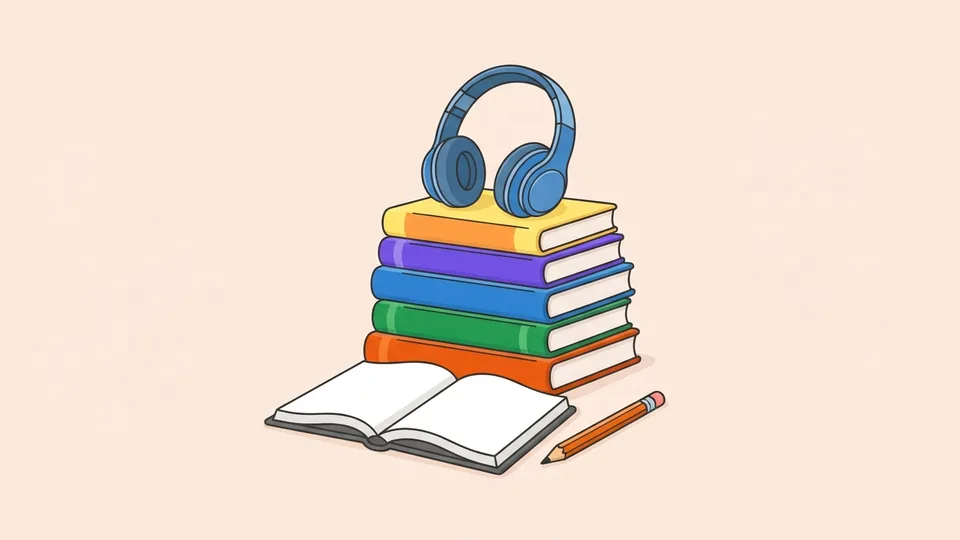
You choose an HSK textbook by three things: the level, the version of the syllabus — the old one or HSK 3.0 — and how you study, with a teacher or on your own. The most widely used series is the HSK Standard Course: a textbook and a workbook for each level. Below: what kinds of HSK books there are, how that series is organized, what to check before you buy, and what to add to the book.
Types of HSK textbooks
- A textbook + workbook series. The core course: one book and one workbook per level. The textbook brings new material, the workbook makes it stick.
- Collections of mock tests. Practice papers in the real exam format. There's nothing new to learn in them — you need them once you've covered the level.
- Word lists for each level. Everything you need to know for the exam. Handy for checking yourself and reviewing.
- Self-study books and online courses. Made for learning without a teacher: explanations in your language, audio and answer checking built in. More in our article on teaching yourself Chinese.
The books come in print and as e-books, from the publisher and from bookstores. No single book takes you all the way: you get one for each level, and add a collection of mock tests before the exam.
- 课本kèběntextbook
- 教材jiàocáitextbook, teaching materials
- 练习liànxíexercise; to practice
- 课文kèwénlesson text
- 词典cídiǎndictionary
- 复习fùxíto review (what you learned)
HSK Standard Course: how the series works
The HSK Standard Course (HSK 标准教程) is the most widely used series for the exam in its old format. The publisher is Beijing Language and Culture University Press, and the explanations are in English and Chinese. Each level has a textbook and a workbook; levels 4–6 come in two parts, so two textbooks and two workbooks per level. That's why "the HSK 1 textbook" is one book plus a workbook, while "the HSK 4 textbook" is already a set of four.
Who it suits. People who study with a teacher or in a class. The series sets the shared order — what you cover in class and what's homework — and the teacher explains, corrects your pronunciation and checks what you write.
What's missing if you study on your own. This is true of any printed book, not just this series:
- Nobody checks your pronunciation. A book can't hear whether you hit the tone.
- Or your writing. Write a character in the wrong stroke order and you'll never know.
- You have to plan your own review. The textbook moves forward, lesson by lesson. When to go back to old words is up to you.
HSK 3.0: textbooks for the new syllabus
The exam's new syllabus was published in November 2025. It has nine levels instead of six, more words at every level, and characters are counted separately: how many you need to recognize when reading and how many you need to write by hand. Here's how many words you need by the end of each level:
| Level | HSK 3.0 | Old HSK |
|---|---|---|
| HSK 1 | 300 | 150 |
| HSK 2 | 500 | 300 |
| HSK 3 | 1,000 | 600 |
| HSK 4 | 2,000 | 1,200 |
| HSK 5 | 3,600 | 2,500 |
| HSK 6 | 5,400 | 5,000 |
Hence the main rule: a textbook for the old syllabus covers roughly half of the new level 1, and an old-style "HSK 3 textbook" isn't the same as level 3 under HSK 3.0. New editions are coming out for the new syllabus, so check which version yours was made for: it says so on the cover and on the copyright page. What exactly changed is in our article on HSK 3.0, and how the exam itself works and when sessions in the new format begin — in the article on the HSK exam.
How to choose an HSK textbook: a checklist
- Syllabus version. Old or HSK 3.0 — check the cover and the copyright page and match it to the exam you'll take.
- Level. Not sure of yours? Take a quick word test and start at the level where you make a lot of mistakes.
- Audio. Is there audio for the texts and words, and how do you get it? Without sound you can't prepare for listening.
- Language of the explanations. English, Chinese or both. If the explanations aren't in a language you read easily, half your effort goes into translating.
- An answer key. You can't study alone without one: otherwise you won't know where you went wrong.
- The level's word list. Complete, at the back of the book or separately, so you can see how far you've come.
- Exam-style tasks. If the textbook and workbook don't have them, you'll need a separate collection of mock tests.
The HSK workbook: why you need it and how to use it
The workbook is the other half of the set: exercises for every lesson of the textbook. The textbook explains; the workbook makes you recall — and what you remember is what you had to recall.
- Do the workbook after the lesson, not instead of it. First the text and the words, then the exercises.
- Don't peek at the textbook. Can't remember? Leave a gap and come back to it at the end.
- Write by hand. It doubles as character practice.
- Check against the answer key and mark your mistakes. A few days later, redo only what you marked.
- Do listening tasks on a single listen. The second listen is for going through it.
What to use alongside the textbook: words, worksheets, tests and a course
What the book doesn't have you can find next to it. These are free on our site:
- Word lists for each level with audio — from HSK 1 to HSK 6, following HSK 3.0: the character, pinyin, meaning and a recording.
- Character worksheets — with a stroke-order check.
- Word mini-tests — from the HSK 1 test to HSK 6, 20 questions each. How to read your score is in our article on HSK tests.
- The pinyin chart — every syllable with audio.
And the Nomto course itself: it follows HSK 3.0 — six levels, 934 lessons, 5,400 words, with Mei explaining in English. Every word and phrase has audio, lessons have a "say it out loud" task with a check, and the words you've learned come back for review on their own. The course can replace the textbook if you study alone, or work with it: the textbook in class, the course between classes.
What the course doesn't have: essay marking, a human teacher, a certificate. There's a mock exam in the new HSK format for all six levels. We're not a test centre and can't register you for the exam. The full study plan is in our article "HSK preparation".
A weekly plan: textbook and online course together
- Monday and Thursday — the textbook. A new lesson: text, words, grammar. With a teacher or on your own.
- Tuesday and Friday — the workbook. Exercises for the lesson you covered, checked against the answer key.
- Every day — ten minutes online. A course lesson or review: you hear the words, say them, and the old ones come back on their own.
- Wednesday — characters. Five to seven characters from the lesson on worksheets, then on paper from memory.
- Saturday — a check. A word test for the level; the words you missed go on next week's list.
- Sunday — rest, or review only.
Move the days around as you like. Two things matter: new material comes from one source, not two at once, and you review every day.
A course built on HSK 3.0
The words and grammar of HSK 1–6 in order, with audio and review. Free during the beta with an account.
Start with HSK 1