Try it: say a word
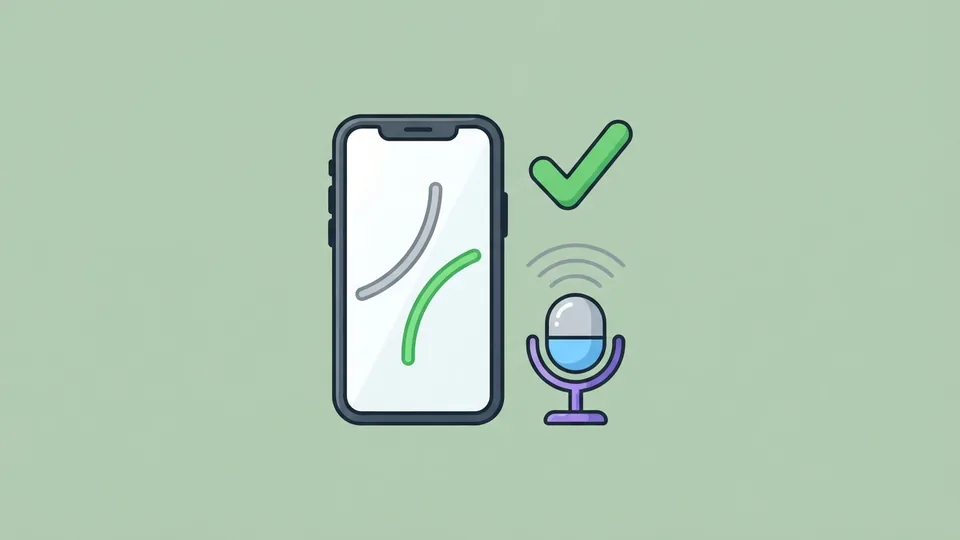
Pick a word, listen to the speaker, tap the microphone and repeat. The gray line is the speaker’s voice, the colored one is yours.
今天jīntiāntoday
How it works
- You listen to the speaker. Their voice is the model: the gray line on the graph. Most words are recorded by native speakers.
- You say it yourself. The trainer splits your recording into two syllables and draws the melody of your voice under the speaker’s, syllable under syllable, however fast you speak.
- You get feedback on each syllable. Not “62 points out of 100” but something useful: “this needs a fourth tone: start high and drop your voice, but yours stayed flat”. You can play back your recording.
Why words and not single syllables
People master the four tones one by one in an evening, and then everything falls apart inside a word. The reason is that a tone sounds different in a word: a third tone before another syllable stays low and doesn’t rise, two third tones in a row are read as a second and a third, and the pitch of each syllable is only heard next to its neighbor. So the trainer judges a syllable both by its shape and by where it sits relative to its neighbor, the way a Chinese listener hears it. More on this in the articles “Tones in Chinese” and “The third tone”.
What’s inside the Pronunciation section
- 16 series: every tone combination. From easy to hard: first two identical tones, then contrasts, and finally the low third tone in every position.
- 128 words with audio. These are ordinary course words like “today”, “teacher” and “goodbye”, not artificial syllables. 113 of them are recorded by native speakers, the rest are voiced by speech synthesis.
- A word check. Speech recognition checks that you said that very word and marks the syllable where it heard a different sound.
- A result for every series. You see which combinations you already get right the first time and which ones are worth coming back to.
The scoring rules were tuned on recordings of the course words and are tested on them: 3,851 recordings. The trainer doesn’t yet score individual sounds like zh, x or ü. How to make them is explained in the articles “Chinese pronunciation” and “The sounds of Chinese”, and you can listen to any syllable in the pinyin chart.
The first series in the app is open to everyone. While we’re in beta, the other fifteen are free with an account, along with the HSK 1–6 lessons, word review and conversations with Mei.
Frequently asked questions
How does the trainer check pronunciation?
It measures the pitch of your voice while you say a word and compares the melody of each syllable with the tone it needs. This happens right in your browser. In the app, speech recognition is added on top: it checks that you said that very word.
Do I need to install anything?
No. The trainer works in the browser on your phone and your computer; all you need is a microphone. The browser will ask once for permission to use it.
Where does the recording of my voice go?
On this page, nowhere: the tone is worked out on your device. In the app, the recording of a word is sent to speech recognition to check that you said the right word, and it isn’t stored anywhere.
Why practice words instead of single syllables?
Tones sound different in a word than on their own: a third tone before another syllable stays low and doesn’t rise, and two third tones in a row are read as a second and a third. That’s why tones learned one by one often fall apart in speech, and why they need to be practiced in pairs.
Is it free?
The demo on this page and the first series in the app are open to everyone. While we’re in beta, the other series and the whole course are free with an account. No subscription, no card.
Is the trainer right for me if I’m just starting?
Yes, if you already know what the four tones are. If not, start with the free “Four tones” lesson in the course (it takes five minutes), then come back to the pairs.
Do the whole first series
Eight words with two level tones: feedback on every syllable and a check of the word itself. Free.
Open the trainer